
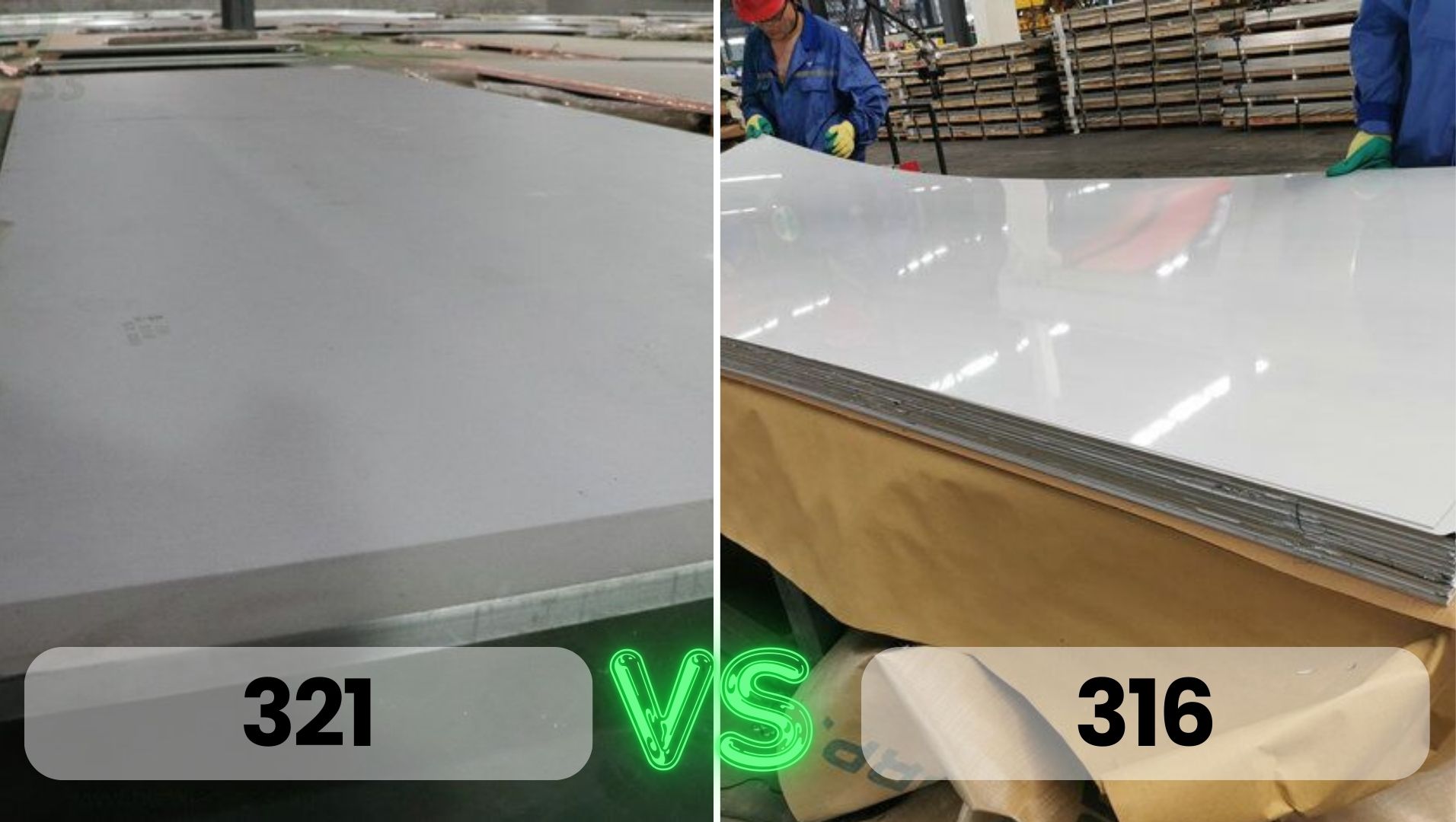
Choosing between 321 and 316 stainless steel feels really confusing. People often struggle with this decision and it is very important to pick the right one.
Stainless steel grades 321 and 316 show big differences in their properties. Grade 321 stands out with high-temperature resistance. It suits heat applications very well. Grade 316 is famous for excellent corrosion resistance in chloride environments. Grade 316 really resists corrosion. Understanding these differences helps you pick the right material for your specific project.
After thinking about my work in construction purchasing, I realized that knowing the specific qualities of materials brings important results. Grade 321 performs well in very hot conditions, like a trustworthy friend. Meanwhile, grade 316 resists rust, especially in salty places. Once, I worked on a project by the sea where grade 316 was crucial. Its strong defense against salt made it the best choice. Different grades have unique benefits. Each one has its own strengths. It is very important to pair these strengths with your project requirements.
Stainless steel 321 is better for high-temperature applications.True
Grade 321 excels in high-temperature environments, making it suitable for applications like aerospace and chemical processing.
Stainless steel 316 has superior corrosion resistance in chloride.True
Grade 316 is specifically designed to resist corrosion, especially in marine and chloride-rich environments, outperforming grade 321.
What makes stainless steel 321 and 316 stand out in corrosion resistance?
Stainless steel grades show important differences. The types we pick play a key role. I often think about grades 321 and 316. What really makes them stand out in fighting rust? Let’s explore this together!
Stainless steel grades 321 and 316 resist corrosion differently because of their unique chemical make-up. Grade 321 performs really well in very high temperatures. Grade 316 provides excellent protection against corrosion in places with lots of chloride. Grade 321 likes heat, but Grade 316 fights chloride.
Overview of Stainless Steel 321 and 316 Corrosion Resistance
Stainless steel caught my attention early; its strength surprised me. Later, I learned that different types of stainless steel work differently in various situations. Both 321 and 316 types are strong, but each has special traits for handling corrosion.
Grade 321 is stabilized with titanium, making it resistant to intergranular corrosion, especially in high-temperature applications. It performs well in environments where chromium carbide precipitation is a concern.
On the other hand, Grade 316 contains molybdenum, which enhances its resistance to pitting and crevice corrosion in chloride-rich environments. This property makes it particularly suitable for marine applications and chemical processing.
Chemical Composition Comparison
The ingredients in these metals always interest me. Let’s compare them simply:
| Property | Grade 321 | Grade 316 |
|---|---|---|
| Chromium (%) | 17.0 – 19.0 | 16.0 – 18.0 |
| Nickel (%) | 9.0 – 12.0 | 10.0 – 14.0 |
| Molybdenum (%) | 0.0 | 2.0 – 3.0 |
| Titanium (%) | 5 x C max | N/A |
Molybdenum in Grade 316 increases its power against pitting much. This feature helps a lot when deciding what metal to use. This knowledge gives me confidence.
Performance Under Various Conditions
Performance differs under certain conditions:
- High-Temperature Applications: Type 321 performs excellently due to its stabilization with titanium, reducing risks associated with high-temperature exposure.
- Chloride Environments: In salty places, Type 316 works well due to its molybdenum content, which combats pitting damage effectively.
Practical Applications
Choices depend on what I need:
- Grade 321 is my choice for airplane exhausts, chemical factories and where high heat might harm the metal.
- Grade 316 is best for sea projects, storing chemicals and food-making tools due to its exceptional resistance to corrosion and staining.
Look at this detailed guide1 for further advice on choosing materials based on corrosion strength.
Conclusion
Knowing how stainless steel grades like Type 321 and Type 316 handle corrosion helped me decide cleverly for projects. Like James, buying the best materials for long-lasting success was a key lesson for me.
Grade 316 is more resistant to pitting than Grade 321.True
Due to its molybdenum content, Grade 316 offers superior resistance to pitting corrosion in chloride-rich environments compared to Grade 321.
Grade 321 is ideal for marine applications.False
Grade 321 is not suitable for marine applications due to its lack of molybdenum, which protects against corrosion in saltwater environments.
What are the key differences in temperature tolerances between stainless steel grades 321 and 316?
Do you ever think about how different types of stainless steel affect your projects? Discover the interesting differences in temperature limits between grades 321 and 316. This topic holds special significance for me, as a procurement manager.
Stainless steel grade 321 handles temperatures up to 900°C (1650°F). Grade 316 handles temperatures only up to around 870°C (1600°F). This difference is very important when choosing materials for use with high heat.
Understanding Stainless Steel Grades 321 and 316
In my role finding top materials, I often see stainless steel grades 321 and 316. Both belong to austenitic stainless steels, but their special features really change outcomes in our projects.
Grade 321 attracts me because it has titanium. This helps it resist corrosion from grain boundaries when temperatures rise. I’ve observed it staying stable at temperatures up to 900°C (1650°F). This trait is truly valuable in places with high stress and heat, like aerospace work. I recall choosing parts for a large project needing strength in extreme heat – grade 321 was my obvious pick. It was indeed a smart choice.
Grade 316, on the other hand, stands out mainly due to more molybdenum, giving it strong resistance to corrosion, especially with chlorine. It works well up to about 870°C (1600°F). For marine projects, it’s really important since it fights off pitting corrosion effectively. Once, for a coastal construction, grade 316 surpassed expectations in those tough conditions. It really showed its worth.
These differences in handling temperatures are not just numbers – they directly affect how long and well materials perform.
Comparative Table of Temperature Tolerances
| Property | Stainless Steel 321 | Stainless Steel 316 |
|---|---|---|
| Maximum Service Temp | Up to 900°C (1650°F) | Up to 870°C (1600°F) |
| Key Alloying Elements | Titanium | Molybdenum |
| Corrosion Resistance | Good at high temps | Excellent in chlorides |
| Common Applications | Aerospace | Marine |
Practical Applications
For picking between grades 321 and 316, specific job needs guide me:
- High-Temperature Environments: Grade 321 is best because it keeps its strength and fights oxidation at high temperatures. I remember using it in an aerospace project with strong heat cycles – grade 321 turned out crucial for success.
- Corrosive Settings: On the other hand, grade 316 is perfect for marine scenarios or areas with chlorides. Its ability to stop pitting corrosion has saved many structures from early breakdown. This point on durability cannot be stressed enough.
Impact on Material Selection
Knowing about these temperatures helps me choose materials wisely. My discussion with James, another manager, explained how the right stainless steel grade can really improve part performance and lifespan. This is a valuable lesson I apply daily.
For more details on stainless steel features and how they could improve your work, check out detailed material specifications2. Let’s master metal profiles together!
Grade 321 withstands higher temperatures than grade 316.True
Grade 321 can handle temperatures up to 900°C, surpassing grade 316's limit of 870°C, making it suitable for high-temperature applications.
Grade 316 is more resistant to chlorides than grade 321.True
Due to its higher molybdenum content, grade 316 offers superior resistance to pitting corrosion in chloride environments compared to grade 321.
How Do Stainless Steel 321 and 316 Compare in Real-World Applications?
Choosing between stainless steel 321 and 316 means understanding their unique uses. Numbers are not enough. Each type has its own story. I learned this through my experiences in buying metal.
Stainless steel 321 is perfect for very high-temperature uses like aerospace and chemical processing. Stainless steel 316 is excellent at resisting corrosion. It really works well in marine and food processing settings.
Overview of Stainless Steel 321 and 316
Stainless steel comes in many types, each suited for different jobs. Among the different grades, 321 and 316 are two of the most popular. Each grade has unique properties that make them suitable for specific applications.
- Stainless Steel 321 performs excellently when temperatures rise. Titanium inside it gives this type great resistance against heat. This metal shines in the aerospace world, standing firm in tough and hot conditions.
- Stainless Steel 316 fights rust and wear well. It acts like a shield in sea environments, especially when around seawater.
Typical Applications for Stainless Steel 321
-
Aerospace Industry:
Stainless Steel 321 is used in parts of planes exposed to extreme heat. Exhaust systems and jet engines need this material because they cannot fail under pressure.
Learn more about aerospace applications3. -
Chemical Processing:
Factories dealing with harsh chemicals at high temperatures turn to 321. This metal shows great strength in reactors and heat exchangers.
Discover chemical processing uses4. -
Oil and Gas:
Pipelines in tough places rely on Stainless Steel 321. It handles big pressures easily. Important materials in oil projects choose this steel because of its reliability.
Explore oil and gas applications5.
Typical Applications for Stainless Steel 316
-
Marine Environments:
Coastal sites favor Stainless Steel 316. Boats and marine pieces enjoy its impressive resistance to salty water corrosion.
See marine industry specifics6. -
Food Processing:
Food plants prefer Stainless Steel 316 because it doesn’t react with food and cleans easily, maintaining hygiene standards effectively.
Find out about food safety7. -
Pharmaceutical Manufacturing:
Factories making medicines use Stainless Steel 316 to stop contamination as it stays strong against chemicals, making it crucial in drug creation.
Understand pharmaceutical uses8.
Comparison Table of Applications
| Application Area | Stainless Steel 321 | Stainless Steel 316 |
|---|---|---|
| Aerospace | High-temperature parts | Limited use |
| Chemical Processing | Equipment for harsh chemicals | Rarely used |
| Oil and Gas | Pipelines and refinery components | Not preferred |
| Marine | Not suitable | Boat fittings, marine hardware |
| Food Processing | Limited application | Preferred choice |
| Pharmaceutical | Limited use | Preferred choice |
By understanding the strengths of each stainless steel grade, procurement managers can make informed decisions on which material will best meet the needs of their projects.
Stainless steel 321 is better for high-temperature applications.True
Due to its excellent oxidation resistance and titanium content, 321 is preferred for aerospace and chemical processing in high temperatures.
Stainless steel 316 is ideal for food processing equipment.True
316's non-reactivity and easy cleaning properties make it the preferred choice for food safety standards in processing environments.
Which grade is more cost-effective for large-scale projects?
When starting big projects, one question is bigger than others꞉ which metal grade can I pick that costs less money? Let’s explore this important decision together.
Selecting the most affordable metal grade for big projects involves considering factors like material features, costs and performance needs. Grades like ASTM A36 and S355 have different strengths and prices, greatly affecting project expenses. Knowing these details helps in choosing wisely to match quality with budget goals.

Choosing the Proper Type of Metal
Choosing the proper type of metal is more than a technical choice; it decides a project’s success and keeps costs controlled. In my early days in procurement, I often faced a choice between high-quality materials and strict project budgets. The excitement of construction usually clashed with the tough facts of cost analysis. I quickly understood that every dollar needs to justify its purpose. Let’s examine this together to find ways to save money while keeping good quality.
Understanding Material Grades
When it comes to large-scale projects, selecting the right grade of metal is crucial for both performance and cost-effectiveness. Different grades of materials, particularly steel, have unique properties that make them suitable for various applications. For instance, common steel grades include:
| Grade | Yield Strength (MPa) | Cost per Ton ($) | Common Uses |
|---|---|---|---|
| ASTM A36 | 250 | 600 | General structural applications |
| ASTM A992 | 345 | 700 | High-rise buildings |
| ASTM A572 | 290 | 650 | Bridges, buildings |
| S355 | 355 | 720 | Heavy structures |
Understanding the yield strength and cost associated with each grade helps in determining which will be the most cost-effective option for your specific project requirements.
Analyzing Cost vs. Performance
Cost-effectiveness isn’t just about the initial purchase price; it also involves understanding how the material performs under various conditions. For example, while a higher grade like S355 may cost more initially, its higher yield strength can lead to savings in design and construction due to reduced material usage and enhanced durability. This means that in some cases, spending more on a superior grade can actually save money in the long run.
Project Specifications and Requirements
The choice of grade should also align with the specific requirements of the project. Factors to consider include:
- Load-bearing capacity
- Environmental conditions
- Aesthetic needs
For large-scale residential projects, a balance between cost and structural integrity is essential. Engaging with suppliers who provide detailed performance data can greatly aid in this decision-making process. For example, you might explore performance charts9 that compare different grades under similar conditions.
Supplier Options and Certifications
It’s critical to choose suppliers who can provide materials meeting industry certifications like ISO or ASTM standards. These certifications ensure that the materials not only meet safety regulations but are also reliable in performance. Additionally, look for suppliers who offer eco-friendly options or recycled content, as these can align with sustainability goals without sacrificing quality. Learn more about eco-friendly materials10 to help guide your selection process.
Cost Analysis Over Time
Consider conducting a cost analysis that includes:
- Initial material costs
- Long-term maintenance costs
- Potential savings from using higher-grade materials
This holistic view can help you identify which grade provides the best value for your investment over time. You can use tools like cost calculators11 to estimate these figures based on your project specifics.
Higher grades can reduce long-term construction costs.True
Investing in higher-grade materials may lead to savings by reducing material usage and enhancing durability, offsetting initial costs over time.
ASTM A36 is the most cost-effective option for all projects.False
While ASTM A36 has a low initial cost, it may not be suitable for high-performance needs compared to other grades like ASTM A572 or S355.
Conclusion
Discover the essential differences between stainless steel grades 321 and 316, focusing on their temperature resistance, corrosion properties, and suitable applications for various industrial needs.
-
This link provides an in-depth analysis of stainless steel grades and their applications, enhancing your understanding of material selection for corrosion resistance. ↩
-
This link provides detailed insights into the thermal characteristics of stainless steel grades, aiding in material selection for engineering projects. ↩
-
Clicking this link will provide you with detailed insights on how stainless steel grades are applied across different industries, enhancing your decision-making process. ↩
-
Explore this link to understand the critical role stainless steel plays in chemical processing, particularly with grade 321. ↩
-
This link offers insights into how stainless steel is utilized within the oil and gas industry, particularly grade 321. ↩
-
Find out how stainless steel 316 is applied in marine environments by following this link. ↩
-
Discover how stainless steel 316 meets food safety standards by checking this link. ↩
-
This link details the use of stainless steel 316 in pharmaceutical manufacturing, emphasizing its importance. ↩
-
This link will provide insights into various steel grades and their applications, helping you make informed decisions for your projects. ↩
-
Explore sustainable options in metal profiles that do not compromise quality while being cost-effective for large-scale projects. ↩
-
Utilize this calculator to analyze long-term costs associated with different steel grades, aiding in smarter procurement decisions. ↩






