
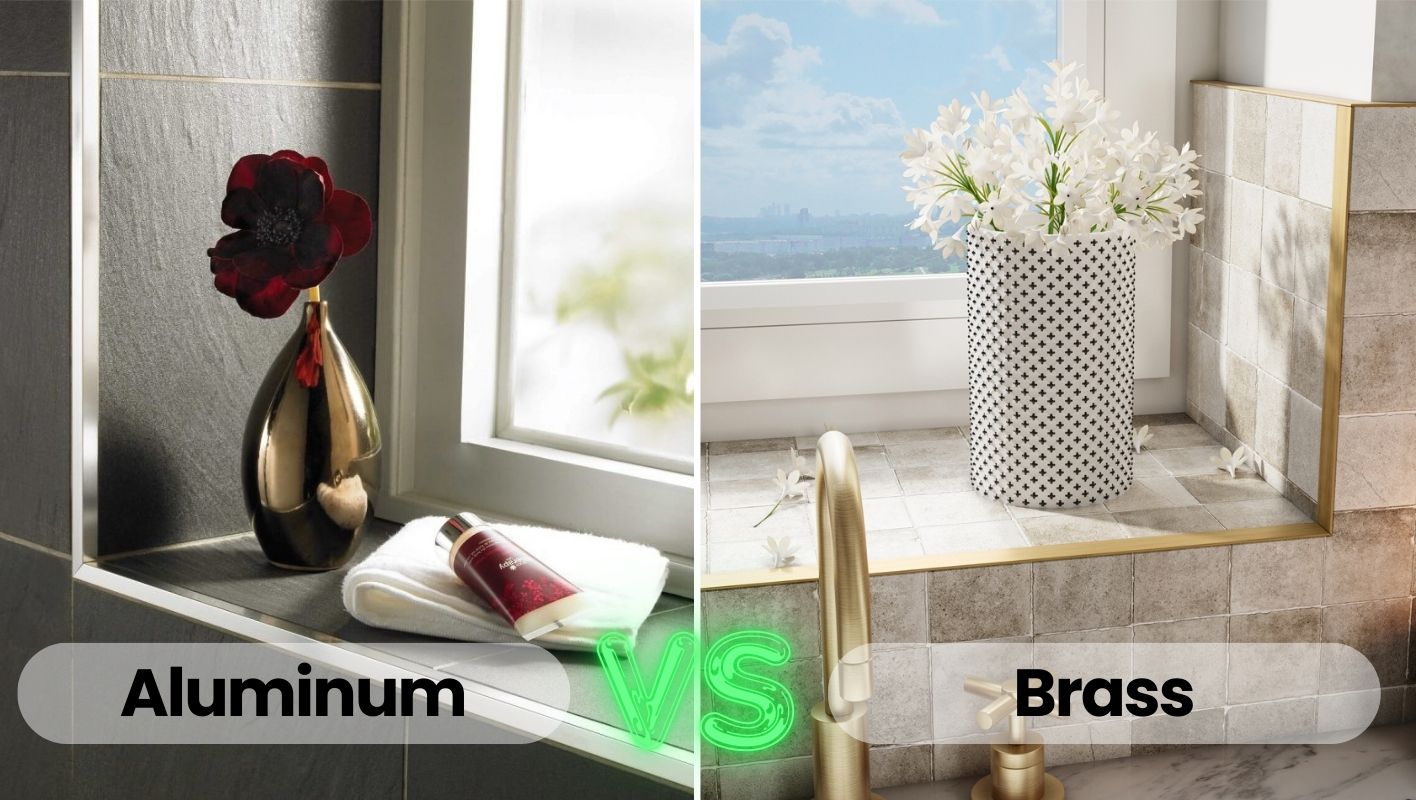
Choosing the right tile trim can feel like deciding between function and flair.
Aluminum tile trims are your go-to for affordability, lightweight ease, and a sleek, modern vibe. Meanwhile, brass trims bring a timeless elegance, boasting durability and corrosion resistance—perfect for classic settings.
I’ve been there, standing in the hardware aisle, mulling over these options, picturing how they’d look in my own kitchen or bathroom. The choice between aluminum tile trim and brass tile trim isn’t just about the aesthetics or price tag—it’s about envisioning your space and how each material fits into that vision.
Aluminum, with its modern appeal, is ideal if you’re leaning towards a contemporary design that doesn’t break the bank. Plus, it’s lightweight, which makes it easier to handle during installation. But if you’re like me, drawn to that timeless, rich look, brass might just win you over. Its durability and resistance to corrosion mean it lasts longer and keeps looking great even in the dampest spots.
Ultimately, picking the right tile trim is about aligning with your project needs. Consider where you’re installing it—maybe a bathroom that requires more durability or a kitchen backsplash where style is paramount. Weigh your priorities, and choose the trim that not only complements your design but also meets practical demands.
Aluminum trims are more affordable than brass trims.True
Aluminum is generally cheaper due to lower material and production costs.
Brass trims are less resistant to corrosion than aluminum.False
Brass is more corrosion-resistant due to its alloy composition.
What are the Aesthetic Differences Between Aluminum and Brass Tile Trims?
Imagine stepping into a room and feeling the vibe instantly – that’s the power of choosing the right tile trim.
Aluminum tile trims offer a sleek, modern look perfect for contemporary spaces, while brass trims deliver a classic elegance. Your choice hinges on the aesthetic you’re aiming for and how well it aligns with your decor style.
Understanding Material Characteristics
When I first dived into the world of tile trims, I quickly realized how crucial understanding each material was. Aluminum caught my eye because of its lightweight feel and impressive resistance to corrosion. It’s the kind of material you’d want in spaces like bathrooms where moisture is relentless. Plus, its flexibility with finishes – from brushed to polished – made it a dream for modern designs that embrace minimalism and industrial vibes.
In contrast, brass has always reminded me of those timeless, vintage interiors you see in old movies. Its natural golden color ages beautifully, developing a patina that feels like history in the making. Imagine pairing brass with earthy tones; it’s like wrapping your space in warmth and luxury.
Comparing Aesthetic Appeal
| Feature | Aluminum | Brass |
|---|---|---|
| Finish Options | Brushed, Polished | Polished, Satin |
| Color Palette | Silver, Black | Natural Gold |
| Design Themes | Contemporary, Industrial | Classic, Vintage |
Aluminum’s neutral tones were perfect when I wanted a crisp, clean look. It reflected light in such a way that even the smallest, dimmest rooms felt alive. On the other hand, brass brought a warmth that turned larger spaces into cozy retreats. Its ability to gracefully age added a unique character I found endearing.
Practical Considerations
Beyond aesthetics, I had to think practically about maintenance and durability. Aluminum trims1 were hassle-free – they don’t tarnish and require minimal upkeep, making them ideal for busy households or commercial spaces where time is precious. Brass needed a bit more TLC; it could tarnish but polishing restored its shine. Sometimes, though, I let it develop a patina for that antique look2 which I found charming.
Personalizing with Finishes
The fun part was playing with finishes to tailor the trims to my specific design goals. A brushed aluminum finish lent a subtle elegance, whereas polished brass became a stunning focal point in any room. Understanding how each finish interacted with light and color was key to achieving the desired visual impact3.
Ultimately, deciding between aluminum and brass trims depended on the vibe I wanted to create and how each material meshed with my decor. Both offered unique opportunities to elevate the visual appeal of my tile installations.
Keep these points in mind as you explore the world of tile trim design! From material durability4 to ensuring stylistic harmony, your choice will significantly shape your space’s aesthetic impact. Use this knowledge to make decisions that resonate with your style preferences and functional needs.
Aluminum trims are heavier than brass trims.False
Aluminum is lightweight, while brass is denser and heavier.
Brass develops a patina over time.True
Brass naturally oxidizes, forming a patina that adds character.
How Do Aluminum and Brass Tile Trims Compare in Durability?
Ever found yourself in a hardware store, staring at rows of tile trims and wondering which one to pick? I have! Let’s dive into the world of aluminum and brass trims and see what they’re all about.
Aluminum trims are lightweight and corrosion-resistant, perfect for wet areas. Brass trims, though heftier, bring unmatched strength and a timeless appeal, ideal for high-traffic zones.
Material Composition and Longevity
Aluminum Tile Trims:
When I first started working with tile trims, I was drawn to aluminum for its ease of use. It’s incredibly light, making it a breeze to handle during installations. Plus, its resistance to corrosion means it stands up to moisture like a champ, which is why I often recommend it for bathrooms and kitchens. Cutting and installing aluminum is simple enough that even DIY enthusiasts5 can feel confident tackling projects.
Brass Tile Trims:
On the other hand, brass was like discovering a hidden gem. It’s an alloy of copper and zinc, bringing both durability and an old-world charm to the table. Although heavier than aluminum, brass develops a patina over time, which some folks (myself included) find adds character. This makes it a fantastic choice for spaces that see a lot of action, like busy hallways or commercial settings.
Comparing Resistance to Wear
| Feature | Aluminum | Brass |
|---|---|---|
| Corrosion Resistance | High | Moderate |
| Strength | Moderate | High |
| Aesthetic Appeal | Modern | Classic |
| Weight | Lightweight | Heavy |
Living in a humid area myself, I can attest to the benefits of aluminum’s rust resistance—it’s practically a no-brainer. However, when it comes to sheer strength and the ability to take a beating without showing wear, brass really holds its ground.
Aesthetic Considerations
Let’s talk style. Aluminum trims give off a sleek, modern vibe—perfect if you’re going for that contemporary look. Personally, I love how they can seamlessly blend into minimalist designs. But if you’re like me and sometimes crave a touch of warmth and richness in your space, brass might be calling your name. Its classic finish can transform any setting into something that feels both timeless and sophisticated.
Environmental Suitability
Wet Areas:
Whenever I’m working on showers or kitchen projects, aluminum is my go-to due to its inherent resistance to moisture. Brass can tarnish if not properly maintained in these conditions; however, some prefer the aged look this creates.
High-Traffic Areas:
For bustling spaces where durability is key, brass is hard to beat as it won’t back down from constant use.
In the end, choosing between aluminum and brass depends on your project’s specific needs—whether it’s the environment, style or budget that guides your decision. Trust me; weighing these factors will make your trim choice easier and your project more successful.
Aluminum trims are more corrosion-resistant than brass.True
Aluminum has high corrosion resistance, ideal for moist environments.
Brass tile trims are lighter than aluminum trims.False
Brass is heavier than aluminum, which is lightweight.
How Does the Cost of Aluminum Compare to Brass Tile Trims?
Ever find yourself torn between the shiny allure of brass and the sleek efficiency of aluminum for your tile trim? I’ve been there too, and let me tell you, the decision can be more than just a matter of taste.
Aluminum tile trims are typically more budget-friendly than brass, with costs influenced by finish and thickness. Brass, while pricier, boasts exceptional durability and a luxurious look, making it ideal for premium projects.
Price Range and Availability
When I first embarked on my journey into tile trims6, I was pleasantly surprised by how economical aluminum options were. Typically, they cost around $3 to $5 per linear foot, influenced by their finish and thickness. It’s a great choice if you’re watching your budget but still want something sleek. On the other hand, brass trims, which caught my eye for their undeniable elegance, usually set you back between $8 and $12 per linear foot. The extra cost reflects both their material value and aesthetic appeal.
Material Durability and Longevity
A few years back, I tackled a project in a bustling commercial space. I initially leaned towards aluminum due to its corrosion resistance—ideal for most settings. But as the demands grew, I couldn’t ignore the superior durability of brass, especially for high-traffic areas where longevity is non-negotiable. If long-term use with minimal maintenance is your priority, brass might be worth the investment.
Aesthetic Appeal and Finish Options
I remember standing in a showroom, surrounded by endless possibilities. Aluminum trims struck me with their modern and versatile finishes, like anodized or powder-coated options. They seemed perfect for a contemporary project I had in mind. But then there was brass, exuding a timeless luxury that’s hard to match—ideal for spaces where elegance is key.
Installation Considerations
One thing I learned the hard way is the ease of handling aluminum trims. They’re lightweight and straightforward to install, which can cut down on labor costs significantly. Brass, while heavier and more demanding in terms of installation skill, offers a robustness that’s hard to beat if impact resistance is important.
Summary Table
| Feature | Aluminum | Brass |
|---|---|---|
| Cost | $3 – $5 per linear foot | $8 – $12 per linear foot |
| Durability | Good | Excellent |
| Aesthetic Appeal | Modern, versatile finishes | Luxurious, classic |
| Installation Ease | Easier | Requires expertise |
If your budget’s tight, you might want to consider other materials7 like PVC for potential savings. Each option has its unique set of perks tailored to different project needs and visions.
Aluminum trims cost less than brass per linear foot.True
Aluminum trims are priced at $3-$5, while brass is $8-$12 per foot.
Brass trims are easier to install than aluminum trims.False
Aluminum is lighter and easier to handle, reducing installation effort.
Which Tile Trim is Best for High-Moisture Areas?
Have you ever stood in a steamy bathroom, watching water droplets race down your tiles, and wondered if your trim can handle it?
For those humid spots in your home, like bathrooms or kitchens, PVC and stainless steel tile trims are your best bets. They’re tough against moisture and corrosion, ensuring your tiles look sleek and stay put.
Understanding Tile Trim Materials
I remember the first time I renovated my bathroom—it was a humid mess, and choosing the right tile trim felt like cracking a secret code. With so many options, each promising to be the best, it took some digging to find what really worked in high-moisture areas like my steamy bathroom or the splash-prone kitchen. Here’s what I found:
| Material | Pros | Cons |
|---|---|---|
| PVC | Water-resistant, affordable, easy to cut | May discolor over time |
| Stainless Steel | Extremely durable, corrosion-resistant | More expensive, requires precision cutting |
Why Choose PVC or Stainless Steel?
PVC Trims became my go-to because they were budget-friendly and easy to work with—perfect for someone like me who’s all about the DIY life. They don’t just resist water; they laugh in the face of mold and make installation a breeze. Their inherent resistance prevents mold growth8.
Stainless Steel Trims, on the other hand, were like the luxury car of trims—sleek and built to last. If you’re after longevity and a modern touch, these trims are worth every penny. Their ability to withstand rust and corrosion means they’ll keep looking good as new for years. They provide resilience against rust and corrosion9.
Application Tips for High-Moisture Areas
I’ve learned that when working with tile trims in wet areas, a few tricks can save a lot of headaches:
- Seal Joints Properly: I always ensure every joint is sealed with a waterproof sealant. Trust me; it stops water from sneaking in where it shouldn’t.
- Select Appropriate Finishes: Matching finishes to your tile design not only protects but also ups the style game.
- Use Non-Porous Grout: This is a game-changer in preventing moisture damage.
For more tips and step-by-step guidance, I’ve found installation tutorials10 incredibly helpful.
In wrapping up my tile trim adventures, I’ve realized that choosing trims that resist water isn’t just about keeping things dry—it’s about creating spaces that stay beautiful and functional over time. So next time you’re picking out trims, think PVC or stainless steel for lasting peace of mind.
PVC trims are resistant to mold growth.True
PVC's water resistance prevents mold growth, ideal for wet areas.
Aluminum trims are more expensive than stainless steel.False
Stainless steel is generally more expensive due to its durability.
Conclusion
Aluminum trims offer affordability and modern aesthetics, while brass trims provide timeless elegance and durability. Choose based on style preference and practical needs for your space.
-
Learn about the low-maintenance nature of aluminum trims. ↩
-
Understand how allowing brass to develop a patina can enhance its antique look. ↩
-
Gain insights into how different finishes affect the visual impact of tile trims. ↩
-
Compare the durability of aluminum and brass tile trims. ↩
-
This link will explore why aluminum is favored in DIY projects, emphasizing its ease of use and versatility. ↩
-
Discovering average costs helps compare how each material fits different budgetary constraints. ↩
-
Understanding various material comparisons aids in selecting trims that meet specific project needs. ↩
-
Learn how PVC’s water-resistant properties help in preventing mold growth on tiles. ↩
-
Discover why stainless steel is a top choice for rust prevention in high-moisture areas. ↩
-
Get comprehensive instructions for proper tile trim installation in wet environments. ↩






