
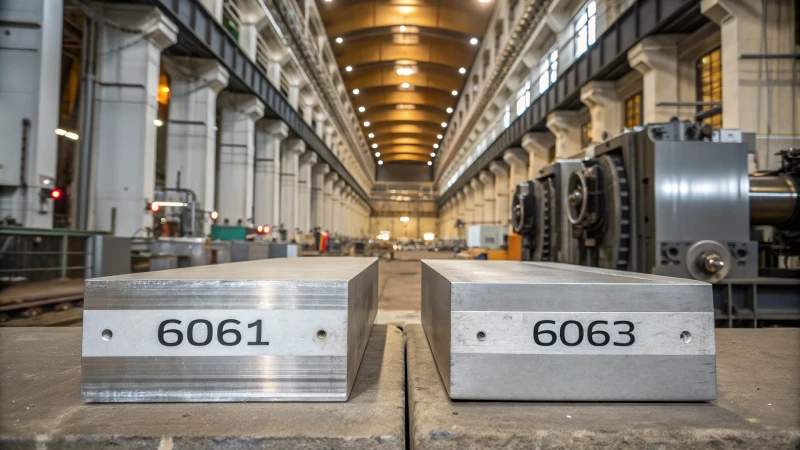
Choosing between 6061 and 6063 aluminum alloys can feel like navigating a metal maze. Let me help you find the right path!
6061 aluminum alloy is strong and easy to machine, perfect for structural tasks. On the other hand, 6063 offers a superior finish, making it ideal for architectural uses. While both are corrosion-resistant, they vary in strength and workability, catering to different project needs.
I remember my first project with aluminum alloys—it felt like choosing a favorite child! But understanding the nuances between 6061 and 6063 was a game-changer. Delving deeper into their properties not only clarified my choices but also elevated my projects. Whether you’re weighing costs or technical specs, knowing these alloys’ strengths and applications ensures you pick the perfect fit for your needs.
6061 is stronger than 6063 aluminum alloy.True
6061 offers higher strength, making it suitable for structural applications.
6063 aluminum has better machinability than 6061.False
6061 is known for its machinability, unlike 6063 which excels in finish quality.
How Do the Mechanical Properties of 6061 and 6063 Compare?
Deciding between aluminum alloys 6061 and 6063 can feel like choosing the right tool for a big project. Let’s break down their key differences to make your decision easier.
Aluminum alloys 6061 and 6063 primarily differ in their strength and workability. Alloy 6061 offers greater strength, ideal for structural uses, while 6063 is more formable, perfect for detailed extrusions. Choose based on your project’s specific demands.
Understanding the Basics of Aluminum Alloys
As someone who’s been in the aluminum game for a while, I’ve seen how aluminum alloys like 6061 and 6063 have become staples in the industry due to their unique mechanical properties1. These alloys are part of the 6xxx series, which means they contain magnesium and silicon as primary alloying elements. This combo not only boosts their strength but also makes them tough through precipitation hardening.
Comparing Mechanical Properties
| Property | 6061 | 6063 |
|---|---|---|
| Tensile Strength | 310 MPa (45,000 psi) | 205 MPa (30,000 psi) |
| Yield Strength | 275 MPa (40,000 psi) | 145 MPa (21,000 psi) |
| Hardness | Brinell 95 | Brinell 73 |
From my experience, 6061 is stronger2 than 6063, making it a solid choice for structural components that need high strength and fatigue resistance. On the flip side, 6063 shines in applications that demand a great surface finish and complex shapes because it’s so easy to extrude.
Applications in Different Industries
Construction and Architecture
In the construction world, choosing between 6061 and 6063 often comes down to the specific application3. For example, when I was working on a project with load-bearing structures like beams and columns, 6061 was my go-to because of its superior strength. But for window frames and architectural trim, I leaned toward 6063 due to its smooth surface and easy anodizing.
Transportation
In transportation—especially in automotive and aerospace—the weight-to-strength ratio is king. Both alloys are lightweight, but with 6061’s strength-to-weight edge4, it’s a favorite for critical parts like automotive frames.
Considerations for Fabrication
- Machinability: I’ve found both alloys easy to machine, though 6061 tends to be slightly easier.
- Welding: While welding both is feasible, I’ve learned the hard way that post-weld heat treatment is crucial to restore strength.
- Corrosion Resistance: Both are excellent here, but 6063 sometimes has a slight edge with its smoother anodized finish.
Choosing the Right Alloy for Your Project
Ultimately, selecting between these alloys involves evaluating your project’s specific needs. I’ve learned to consider factors like required strength, ease of fabrication, and desired finish. For those intricate designs where formability is paramount, 6063 is ideal5. But if strength is non-negotiable, I always reach for 6061.
Understanding these differences lets you leverage each alloy’s strengths effectively, optimizing performance and cost-efficiency in your projects. That’s been my secret sauce in ensuring every project not only meets but exceeds expectations.
6061 aluminum has higher tensile strength than 6063.True
6061's tensile strength is 310 MPa, while 6063's is 205 MPa.
6063 aluminum is better for load-bearing structures than 6061.False
6061, with higher strength, is preferred for load-bearing structures.
Which Aluminum Alloy Offers Better Corrosion Resistance?
When I first dipped my toes into the world of aluminum alloys, I had no idea just how crucial choosing the right one for corrosion resistance could be.
Aluminum alloys 5052, 6061, and 3003 are my go-to choices for their stellar corrosion resistance. Each alloy shines in different settings, offering a unique blend of properties that make them indispensable in industries demanding durability against harsh elements.
Understanding Aluminum Alloys for Corrosion Resistance
I remember the early days of my career when I first encountered aluminum alloys. Like a lot of folks, I was overwhelmed by the options. But learning about their specific properties was like discovering a toolbox for various projects. Here’s a closer look at three of the most reliable options I’ve come across:
| Alloy | Key Features |
|---|---|
| 5052 | High strength, marine resistant |
| 6061 | Versatile, good weldability |
| 3003 | Excellent workability, ductile |
Alloy 5052: The Marine Marvel
5052 has been a lifesaver for me on numerous occasions, especially with projects that involved exposure to the sea. Its high magnesium content makes it perfect for marine environments6—think boat hulls or structures that need to brave the salty air. Whenever I get a project like this, I know 5052 won’t let me down.
Alloy 6061: The Versatile Performer
When versatility is the name of the game, 6061 is my pick. It’s like the Swiss Army knife of aluminum alloys, offering good weldability and mechanical properties. I remember a big structural project that required both strength and ease of machining—6061 fit the bill perfectly with its good mechanical properties7.
Alloy 3003: The Workhorse of Workability
For those times when I needed something more pliable yet resistant to chemical corrosion, 3003 was my choice. It’s not as strong as the others, but its workability is unmatched. Perfect for food and chemical handling applications, it’s been a reliable ally in projects where forming is key.
Factors Influencing Corrosion Resistance
Choosing the right alloy isn’t just about picking one off the shelf; it’s about understanding your project’s needs. Environmental conditions, mechanical requirements, and cost all play a part in this decision-making process. Elements like magnesium and silicon can boost resistance but may alter other properties8 like strength.
By considering these factors carefully, I’ve managed to make informed choices about which aluminum alloy to use without compromising on quality or performance. And trust me, when you’re juggling multiple priorities, it helps to lean on industry standards and seek advice from suppliers to ensure everything lines up just right.
5052 alloy is best for marine environments.True
5052 has high magnesium content, ideal for marine use.
3003 alloy offers the highest strength.False
3003 is known for workability, not strength like 5052 or 6061.
What Are the Typical Applications for 6061 and 6063 Alloys?
Choosing the right aluminum alloy can feel like finding the perfect partner for your project—it’s all about matching strengths to needs.
The 6061 aluminum alloy shines in structural roles that demand high strength, like in construction and aerospace, while 6063 alloy is the go-to for architectural projects thanks to its excellent finish and corrosion resistance.
Aluminum Alloy 6061: Strength Meets Versatility
Imagine you’re building a bridge—not the literal kind, perhaps, but one that connects ideas to reality. That’s where 6061 comes into play. I remember the first time I worked on a project requiring a material that could stand up to stress without buckling. We were designing parts for aircraft, where every gram counted, and 6061 was our hero, marrying lightweight nature with robust strength. It’s like having an unyielding but gentle giant on your team.
In the construction world, when I needed materials that wouldn’t flinch under pressure, 6061 was my go-to. Its durability and resistance to deformation make it indispensable for structural elements9 like beams and columns. And let’s not forget the marine environments where corrosion resistance isn’t just nice to have—it’s a lifesaver.
A typical application table for 6061:
| Industry | Applications |
|---|---|
| Aerospace | Aircraft frames |
| Automotive | Vehicle components |
| Construction | Structural frames |
| Marine | Boat hulls |
Aluminum Alloy 6063: Aesthetic Appeal and Precision
If you’ve ever admired the sleek lines of a window frame or the intricate details in an architectural design, chances are you’ve seen the handiwork of 6063. I once collaborated on a project where aesthetic appeal was just as crucial as functionality. We needed something that could be molded into beautiful yet sturdy structures—enter 6063.
This alloy is perfect for when precision meets art. It was like sculpting with clay but without sacrificing strength. Its malleability allowed us to create complex shapes easily, making it a favorite for designers who want beauty without compromise.
Applications of 6063:
| Industry | Applications |
|---|---|
| Architecture | Window & door frames |
| Consumer Goods | Furniture parts |
| Electronics | Heat sinks |
Both alloys offer customizable finishes, enhancing their appeal and resilience through processes like anodizing or powder-coating. When deciding between them, understanding your project’s specific needs helps you make the most of these remarkable materials.
Explore more about these alloys by checking detailed material properties10 and industry standards that guide their applications.
6061 alloy is used in marine environments for boat hulls.True
6061 alloy's corrosion resistance makes it suitable for marine applications.
6063 alloy is commonly used for aircraft frames.False
6063 is preferred for architectural uses, not aerospace, due to its finish.
How does cost affect my choice between 6061 and 6063?
Ever stood in the aisle, torn between two options, feeling the weight of cost on your decision? That’s how I feel choosing between aluminum alloys 6061 and 6063.
Cost impacts my choice between 6061 and 6063 by affecting budget plans, project scope, and the best material for specific needs. Weighing costs against properties helps pick the right alloy.
Comparing Material Costs
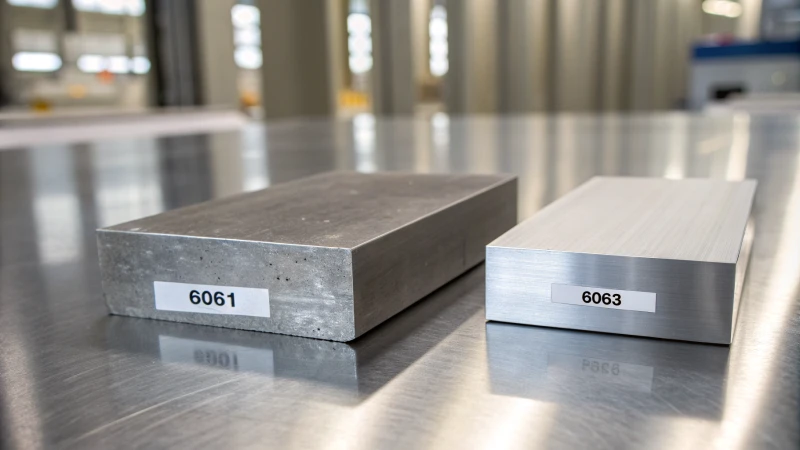
Whenever I’m caught between selecting 6061 and 6063, cost plays a pivotal role. For instance, aluminum alloy 606111 tends to be pricier due to its enhanced strength and versatility—traits that make it perfect for structural applications12. On the flip side, 6063 often wins in affordability, especially when projects require elaborate designs.
Cost vs. Performance
It’s crucial for me to assess the cost-performance ratio13 when deciding between these two. While 6061 boasts superior mechanical properties like tensile and yield strength, 6063 shines in malleability, ideal for crafting unique shapes. If a project demands high performance, the extra expense of 6061 might just be worth it.
| Property | 6061 Alloy | 6063 Alloy |
|---|---|---|
| Cost | Higher | Lower |
| Strength | High | Moderate |
| Malleability | Moderate | High |
| Application | Structural | Architectural |
Considering Long-term Costs
I’ve learned that initial costs are only part of the bigger picture. The total cost of ownership14 involves factors like lifespan, maintenance, and potential downtimes. Although 6061 might be more expensive upfront, its durability can result in savings over time through reduced maintenance and replacement needs.
Application-Specific Cost Implications
The decision between 6061 and 6063 is also swayed by specific application requirements. Take architectural projects, for instance—here, aesthetic finishes like anodizing are crucial, making 6063’s cost-effectiveness particularly appealing. Conversely, for industrial uses15 where strength is non-negotiable, investing in 6061 can be justified.
Understanding these cost implications allows me to make strategic decisions tailored to the unique demands and constraints of each project.
6061 alloy is more expensive than 6063.True
6061 has higher strength, making it costlier than 6063.
6063 alloy is stronger than 6061.False
6061 offers higher tensile and yield strength than 6063.
Conclusion
6061 aluminum alloy is stronger and ideal for structural applications, while 6063 excels in architectural uses due to its superior finish and formability, catering to different project needs.
-
Explore the fundamental characteristics of aluminum alloys to understand why they are widely used in various applications. ↩
-
Discover detailed insights into why 6061 is stronger than 6063, focusing on their structural applications. ↩
-
Learn about how different aluminum alloys are utilized in the construction industry for varying structural needs. ↩
-
Uncover why aluminum alloys are favored in automotive manufacturing, particularly in frame construction. ↩
-
Find out why 6063 is often chosen for extrusion projects requiring high-quality surface finishes. ↩
-
Discover why 5052 is favored in marine environments. ↩
-
Understand the features that contribute to 6061’s popularity across various industries. ↩
-
Explore how these elements influence aluminum alloy characteristics. ↩
-
Learn how 6061 aluminum serves in construction for its durability and stress resistance. ↩
-
Compare the properties of these alloys to choose the best fit for your project. ↩
-
Explore detailed cost comparisons between aluminum alloys to optimize your material choice. ↩
-
Learn about structural applications where the higher cost of 6061 pays off. ↩
-
Understand how to weigh material cost against performance in your projects. ↩
-
Discover long-term financial impacts of choosing different aluminum alloys. ↩
-
Find out where the investment in a stronger alloy like 6061 is necessary. ↩






