

Brightening up your child’s room with LED light strips can be a fun adventure. But let’s talk safety—are they really safe for our little ones?
LED light strips are generally safe for decorating a child’s room when used properly. They produce minimal heat, reducing fire risks, and have low voltage, making them safer than traditional lighting. Ensure proper installation and use child-friendly designs for added safety.
While LED lights are typically safe, understanding the specific factors that contribute to their safety can help you make informed decisions. Read on to learn about potential risks and best practices to keep your child’s room both fun and secure.
LED light strips produce minimal heat, reducing fire risks.True
LEDs convert most energy into light, not heat, lowering fire hazards.
What Are the Safety Features of LED Light Strips?
LED light strips are designed with several safety features to ensure they are suitable for a child’s room. Understanding these features can help you make informed decorating decisions.
LED light strips incorporate safety features like low voltage operation, minimal heat emission, and durable, flexible designs to ensure child safety. They also often come with adhesive backing that eliminates the need for nails or screws, reducing physical hazards.
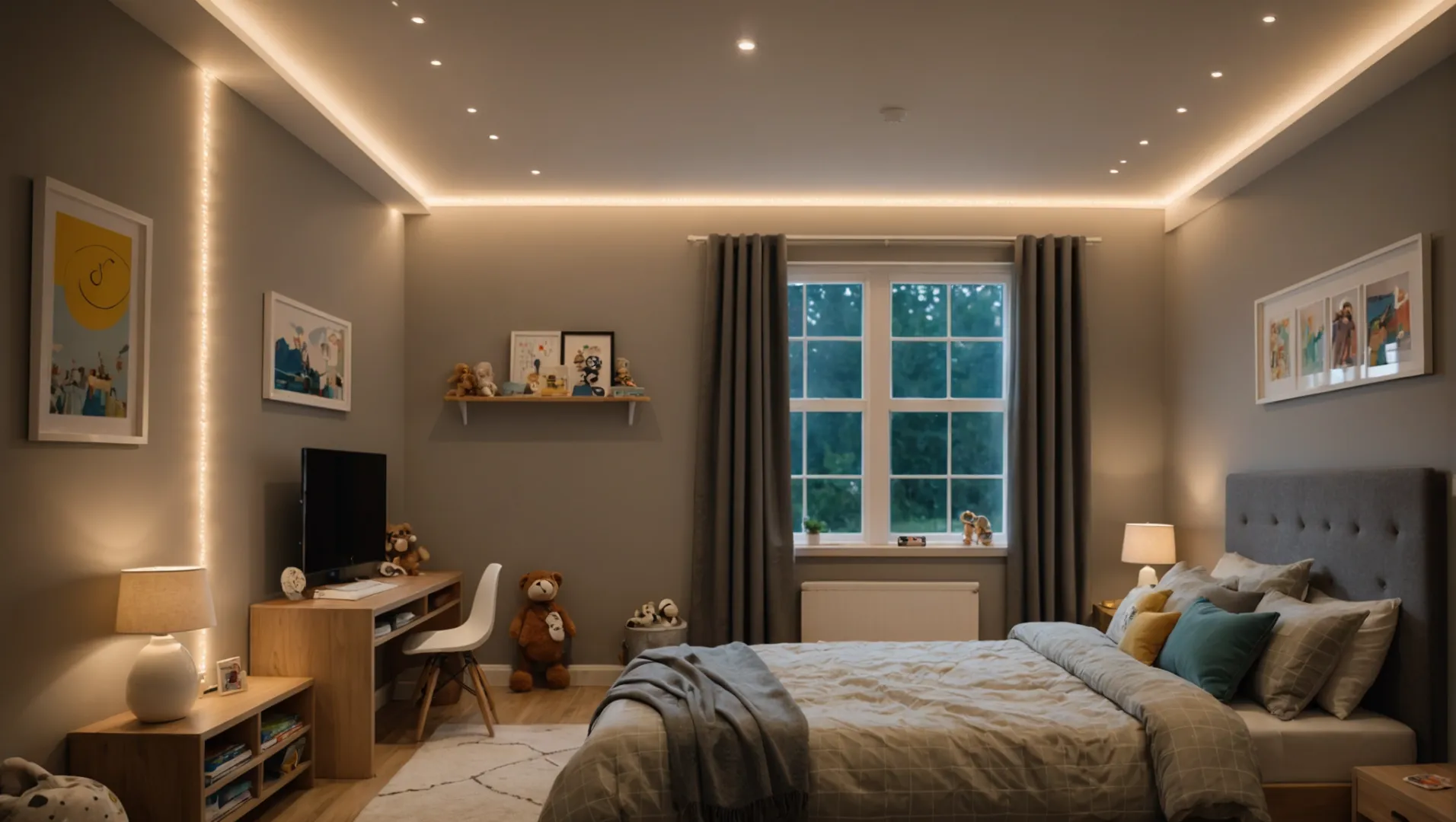
Understanding Low Voltage Operation
One of the primary safety features1 of LED light strips is their low voltage operation, typically ranging from 12V to 24V. This low voltage not only enhances energy efficiency but also significantly reduces the risk of electrical shock, making them safer compared to traditional lighting systems.
Minimal Heat Emission
LED lights are known for their energy efficiency and the ability to remain cool to the touch. Unlike incandescent bulbs, which convert a significant portion of energy into heat, LEDs convert most of it into light, thus minimizing the risk of burns or fire hazards. For parents, this feature is particularly crucial when considering lighting options for a child’s room.
Flexible and Durable Designs
LED light strips are designed to be both flexible and durable, allowing them to be easily bent or cut to fit various spaces without compromising their function. This flexibility means they can be installed in creative ways, such as outlining a bed frame or creating patterns on walls, without posing a risk of breakage or injury.
Safe Installation Methods
Most LED strips come with adhesive backing, which allows them to be mounted without the need for nails or screws, eliminating potential hazards associated with loose hardware. Moreover, many models include over-current protection and insulated casings to further enhance safety.
| Safety Feature | Benefit |
|---|---|
| Low Voltage | Reduces electrical shock risk |
| Minimal Heat Emission | Prevents burns and fire hazards |
| Flexible Design | Safe and adaptable installation |
| Adhesive Backing | No need for hazardous hardware |
Understanding these features is key to ensuring the safety of LED light strips in your child’s room. Always check product specifications and reviews to confirm these safety aspects before purchasing.
LED strips operate at low voltage to reduce shock risk.True
LED strips use 12V-24V, lowering electrical shock risk.
LED light strips require nails for installation.False
They use adhesive backing, eliminating the need for nails.
How to Properly Install LED Lights in a Child’s Room?
Installing LED lights in a child’s room can enhance the ambiance and provide soft lighting for various activities.
To install LED lights in a child’s room safely, choose low-voltage strips, secure them out of reach, and use adhesive-backed strips for easy installation. Ensure all connections are insulated to prevent electrical issues and opt for plug-and-play systems to avoid complex wiring.

Choose the Right LED Light Strips
When selecting LED light strips for a child’s room, prioritize safety and functionality. Opt for low-voltage options, ideally 12V, as they pose less risk if touched. Look for models with UL or CE certification to ensure they meet safety standards.
Plan the Layout
Before installing, map out where you want the lights to go. Popular choices include under shelves, around windows, or along the ceiling. This not only enhances the room’s ambiance but also ensures that the strips are placed out of a child’s reach.
Secure Installation
Use adhesive-backed LED strips that adhere directly to surfaces without nails or screws, reducing hazards. For extra security, consider using mounting clips2 for areas where strips might peel off. Ensure that all exposed wiring is covered and insulated to prevent potential accidents.
Plug-and-Play Systems
For ease and safety, opt for plug-and-play LED systems that eliminate the need for intricate wiring. These systems are straightforward to install and generally safer as they minimize the risk of incorrect electrical connections.
Child-Friendly Features
Choose LED strips with child-friendly features such as remote controls with lock functions or timer settings. These additions not only make controlling the lights easier but also prevent children from accidentally altering settings.
Test and Monitor
After installation, test the lights to ensure all connections are secure and functioning correctly. Regularly inspect the setup to identify any signs of wear or damage that may require attention. Consider using smart home apps3 to monitor and control the lights remotely, adding an extra layer of convenience and safety.
LED lights should be installed within a child's reach.False
LED lights should be out of reach to prevent accidents and ensure safety.
Low-voltage LED strips are safer for children's rooms.True
Low-voltage strips, like 12V, reduce electrical risk if touched by children.
What Are the Potential Hazards of LED Light Strips?
While LED light strips are popular for their safety, understanding potential hazards is crucial for child safety.
Potential hazards of LED light strips include poor quality materials, improper installation, and electromagnetic interference. Ensure products are certified and follow manufacturer’s guidelines to minimize risks.
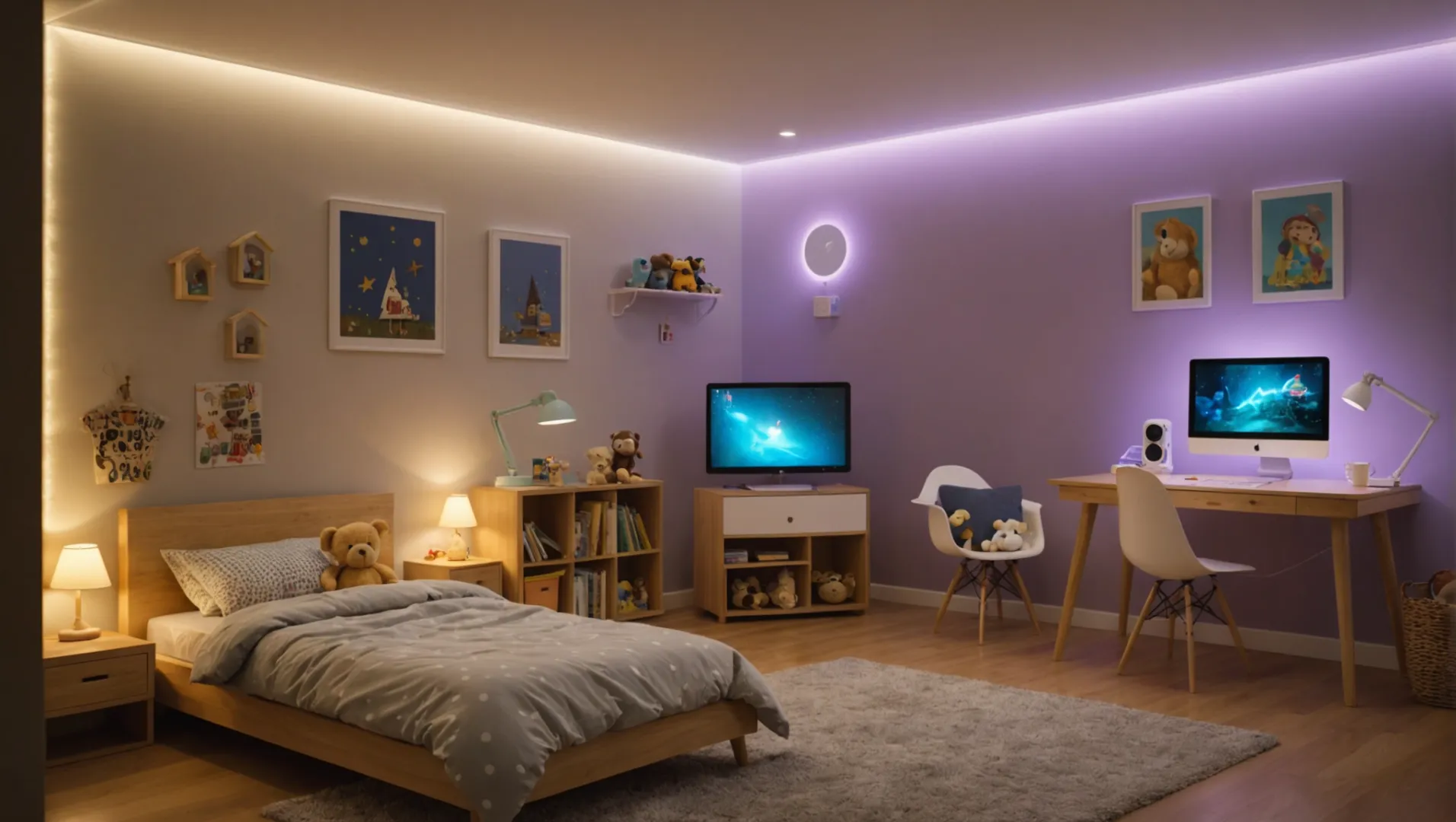
Understanding Material Quality
One of the primary concerns with LED light strips is the quality of materials used. Low-quality LED strips may contain hazardous substances such as lead or harmful plastics. These materials can pose health risks if they degrade over time or in case of physical damage.
When purchasing LED strips, look for products that are certified by recognized safety standards organizations like UL or CE. Certified products ensure that the materials used are safe and meet strict regulatory guidelines.
Installation Hazards
Improper installation is another potential hazard. Incorrectly installed LED strips can lead to electrical shorts or overheating, which may cause a fire. To prevent this, always adhere to the installation guidelines provided by the manufacturer. It’s crucial to use the appropriate power supply and connectors specific to the LED strip model.
Here’s a simple table outlining safe installation practices:
| Installation Aspect | Best Practice |
|---|---|
| Power Supply | Use only the recommended voltage and amperage |
| Placement | Avoid placing near water sources or combustible materials |
| Secure Attachment | Use clips or brackets instead of adhesives |
Electromagnetic Interference (EMI)
LED light strips can also generate electromagnetic interference, which may disrupt electronic devices in close proximity. This is particularly concerning in a child’s room where sensitive equipment like baby monitors might be used.
To mitigate this risk, opt for LED strips with built-in EMI shielding or place them at a distance from sensitive electronics.
Heat Emission
Although LEDs are known for low heat emission compared to traditional bulbs, prolonged usage or faulty strips can still generate enough heat to pose a burn risk. Always check for signs of overheating, such as discoloration or a burning smell, which indicate it’s time to switch off the lights and inspect them.
Explore more on safety standards for children’s products4 to ensure overall safety.
In summary, while LED light strips offer a vibrant and energy-efficient option for decorating children’s rooms, being aware of potential hazards and taking preventive measures can further ensure their safe use.
LED strips can cause electromagnetic interference.True
LED strips may disrupt nearby electronics like baby monitors.
All LED light strips are certified by safety standards.False
Not all LED strips are certified; check for UL or CE marks.
Are There Specific Child-Safe LED Light Strip Products?
When it comes to your child’s room, ensuring safety in every aspect is paramount. Are there LED light strips designed specifically with child safety in mind?
Yes, specific child-safe LED light strip products exist, designed with features like low heat emission, shatterproof casings, and secure adhesive backing. These products prioritize safety by using materials that reduce hazards and offering designs that prevent tampering.
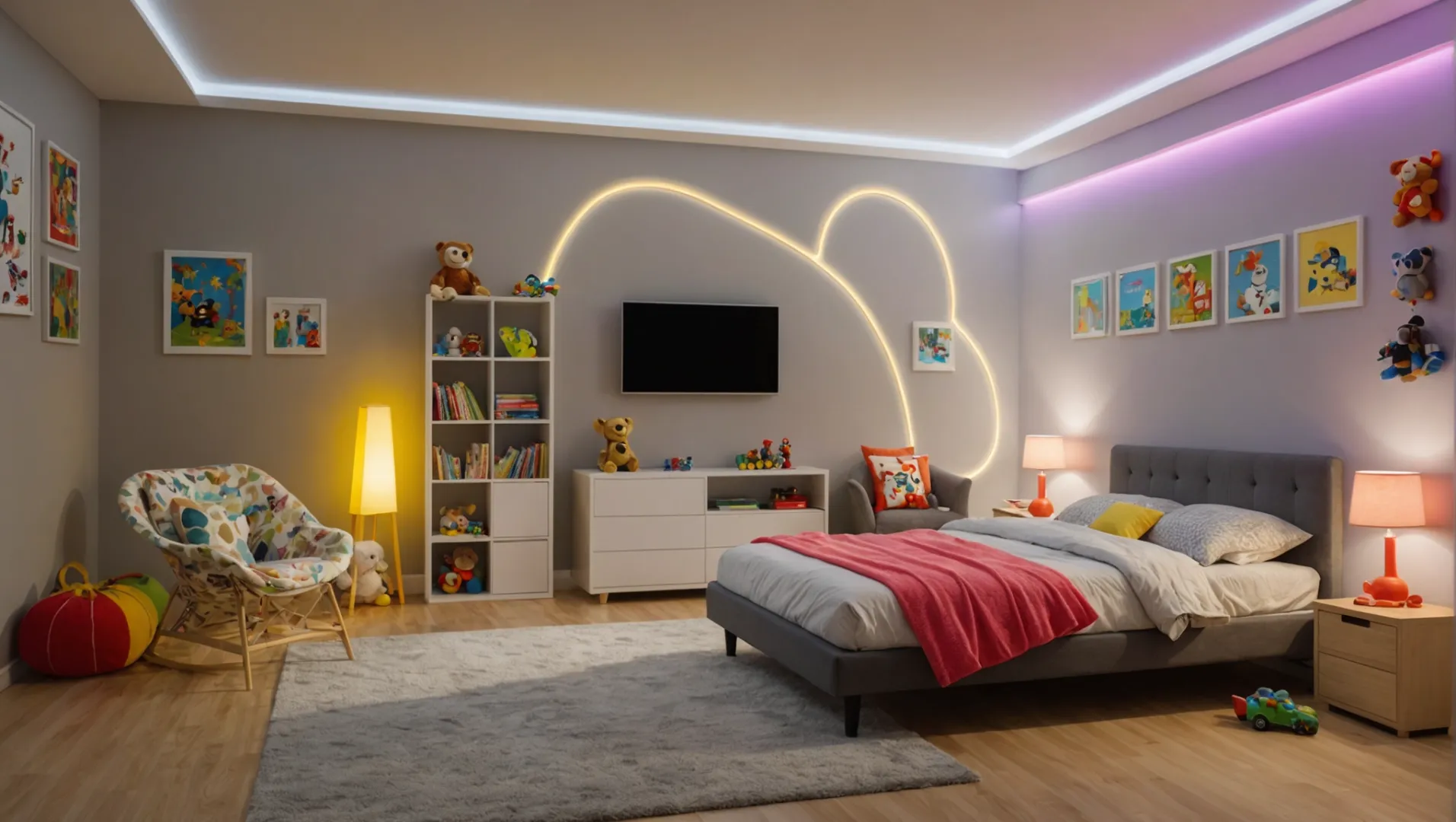
Features to Look for in Child-Safe LED Light Strips
When selecting LED light strips for a child’s room, consider products with certain safety features. Low heat emission is crucial, as it prevents burns if a child touches the lights. Also, opt for shatterproof designs that minimize risks if the lights are accidentally pulled or dropped.
Secure adhesive backing is another important feature. It ensures the lights remain firmly attached to surfaces, preventing children from tampering with or pulling them down. Some products also offer remote control options to adjust brightness and colors without needing to touch the strip directly.
Recommended Products for Child Safety
Several manufacturers have designed LED light strips with child safety in mind. Brands often highlight their safety certifications, such as UL listing5, which ensures the product meets certain safety standards.
| Feature | Description |
|---|---|
| Low Voltage | Safer than traditional lighting, reducing electrical risks. |
| BPA-Free Materials | Non-toxic components to prevent harmful exposure. |
| Customizable Length | Allows precise fitting to avoid excess hanging cables. |
Additional Considerations
While selecting child-safe products is a step in the right direction, always supervise installation and usage. Consider placing the LED strips out of reach of younger children and ensure all wires are neatly concealed or secured.
For parents considering smart lighting options, some LED strips can be integrated with smart home systems. This allows for scheduled operation, which can be useful for creating bedtime routines or ensuring the lights are turned off during the night.
Overall, choosing the right LED light strips involves balancing aesthetics with safety features to create a fun yet secure environment for your child. Explore child-safe LED options6 to make an informed decision.
Child-safe LED strips emit low heat.True
These strips are designed to prevent burns if touched by children.
All LED light strips are child-safe by default.False
Only specific products are designed with child safety features.
Conclusion
In summary, LED light strips can safely brighten up your child’s room with the right precautions. Ensure proper installation, use child-safe designs, and monitor usage to maintain a secure environment.
-
Discover how LED light strips ensure child safety.: LED strip lights are made with non-toxic materials and are frequently considered a “green” lighting option. Some concern has been raised in the past about pets … ↩
-
Mounting clips enhance stability, preventing LED strips from peeling off surfaces.: 100 Pack Strip Light Mounting Bracket,Transparent Fixing Clips for 10mm Wide IP65 Waterproof 5050 LED Strip Light,One Side Fixing,100 Screws Included ↩
-
Smart home apps allow easy monitoring and control of your LED lighting system.: The easiest way to see if a light is compatible is to download the Tuya or Smart Life app & try to pair the device with it. My guess is that it … ↩
-
Learn about essential safety certifications to ensure child-safe products.: Children’s products are required to undergo third-party testing and to have a written Children’s Product Certificate (CPC) demonstrating compliance. ↩
-
Understand UL listing’s importance in ensuring product safety.: The UL mark would mean that these electrical products would be tested to ensure no safety hazards or malfunctions take place. While individual private clients … ↩
-
Discover top-rated LED strips designed for child safety.: The Govee Wi-Fi RGBIC strip lights perform brilliantly and give you longer lengths and more coverage for less money than the competition. The … ↩






