
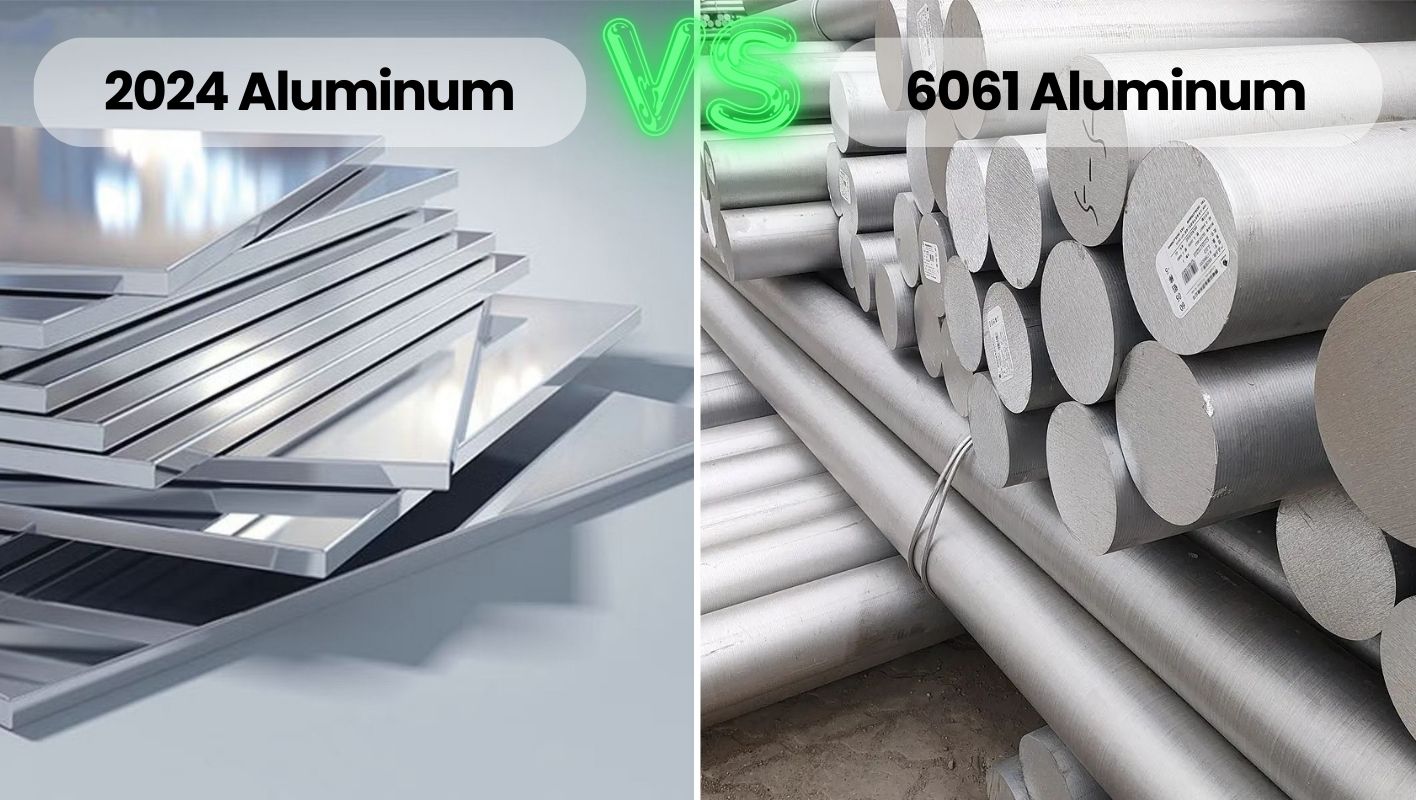
Ever stood at the crossroads of choosing between two aluminum alloys and wondered what really sets them apart?
The main differences between 2024 and 6061 aluminum alloys lie in their composition, mechanical properties, and typical applications. 2024 is known for its high strength and fatigue resistance, making it ideal for aerospace applications, whereas 6061 offers better weldability and corrosion resistance, suitable for structural applications.
I remember the first time I had to choose between these two alloys—it was like deciding between a sports car and a reliable family sedan. Both had their charm and utility, but the key was understanding what each alloy brought to the table. For aerospace projects, 2024’s strength and fatigue resistance were unbeatable, much like needing that extra horsepower for high-speed adventures. Meanwhile, 6061’s weldability and corrosion resistance felt akin to choosing a vehicle that wouldn’t just weather the storm but thrive in it. Let’s dive deeper into these metals to see which one aligns with your project needs, whether it’s cost-effectiveness or process compatibility.
2024 aluminum is more corrosion-resistant than 6061.False
6061 aluminum has better corrosion resistance compared to 2024.
6061 aluminum is better for welding than 2024.True
6061 alloy offers superior weldability, unlike 2024, which is less weldable.
What Makes 2024 Different from 6061 Aluminum Alloy?
Choosing the right aluminum alloy can feel like picking the perfect tool from a crowded toolbox.
The main difference between 2024 and 6061 aluminum alloys is in their composition and mechanical properties. Alloy 2024 offers greater strength and fatigue resistance, while 6061 is known for its superior corrosion resistance and weldability, making each ideal for distinct applications.
When I first stepped into the world of metal processing, I felt like a kid in a candy store, mesmerized by the endless possibilities each alloy presented. Now, years later, I still get that same thrill when exploring the unique traits of aluminum alloys like 2024 and 6061.
Composition Differences
Aluminum 2024 reminds me of that one friend who excels at everything sporty—it has a remarkable strength-to-weight ratio thanks to its high copper content.
| Element | 2024 (%) | 6061 (%) |
|---|---|---|
| Copper | 3.8-4.9 | 0.15-0.40 |
| Silicon | 0.5 max | 0.4-0.8 |
| Magnesium | 1.2-1.8 | 0.8-1.2 |
In contrast, Aluminum 60611 is more like the all-rounder in your group, combining magnesium and silicon to offer excellent corrosion resistance and workability.
Mechanical Properties
Tensile Strength
I remember working on an aerospace project where the tensile strength of 20242 was a game changer, just like discovering a hidden superpower.
| Property | 2024 | 6061 |
|---|---|---|
| Tensile Strength (MPa) | ~470-480 | ~310 |
Corrosion Resistance
But when it comes to resisting the wear and tear of marine environments, nothing beats the natural protective layer of 60613.
Applications
Deciding between these two is often about matching their strengths with your needs:
- Aerospace: The high strength4 and fatigue resistance of 20245 are unmatched.
- Marine and Automotive: The superior corrosion resistance of 60616 makes it a reliable choice.
Weldability and Machinability
6061’s7 weldability reminds me of those seamless projects where everything just clicks—making it a favorite in construction.
In summary, understanding the nuanced differences in mechanical properties between aluminum alloys8 like 20249 and 606110 is essential for selecting the right material for your engineering needs.
Aluminum 2024 has higher tensile strength than 6061.True
2024's tensile strength is ~470-480 MPa, while 6061's is ~310 MPa.
Aluminum 6061 is less corrosion-resistant than 2024.False
6061 has superior corrosion resistance due to its natural oxide layer.
How Do Welding Capabilities Compare Between 2024 and 6061?
Ever found yourself staring at a pile of metal, wondering how on earth you’ll weld it together? I’ve been there too, especially when choosing between aluminum alloys like 2024 and 6061.
While 2024 aluminum alloy struggles with weldability due to its high copper content, leading to cracking, 6061 is much more accommodating. This makes 6061 ideal for reliable welding with TIG and MIG methods.
Understanding Aluminum Alloys
If you’ve ever delved into the world of aluminum alloys, you’ve probably crossed paths with 202411 and 606112. They’re staples in industries like aerospace, where performance is non-negotiable. Let me take you back to when I first handled these materials. The 2024 alloy, with its remarkable strength-to-weight ratio, seemed perfect at first glance. But I soon learned that its high copper content turned welding into a nightmare, prone to cracking under pressure.
Conversely, the 6061 alloy became my go-to choice. With magnesium and silicon in its arsenal, it was like the friend who always comes through in a pinch—perfect for projects where solid welds are a must.
Comparing Welding Methods
2024 Alloy
- TIG Welding: It’s like trying to win a marathon in flip-flops—possible but fraught with challenges due to hot cracking.
- MIG Welding: Forget about it unless you’re prepared for extensive pre-and post-weld heat treatments.
6061 Alloy
- TIG Welding: With the right techniques, it’s a rewarding experience.
- MIG Welding: Think of it as gliding through a smooth process to achieve robust welded joints.
Application Implications
The choice between these alloys can make or break your project. Picture this: you’re in the thick of aerospace manufacturing13. Opting for 6061 not only simplifies production but saves you from the headache of complex post-weld treatments.
Technical Considerations
Here’s a snapshot comparison to keep handy:
| Property | 2024 | 6061 |
|---|---|---|
| Weldability | Poor | Good |
| Strength | High | Medium |
| Corrosion Resistance | Low | High |
| Typical Use Case | Aerospace | Structural |
When welding prowess is at the top of your checklist, 6061 shines brightly. But if sheer strength is your priority and welding isn’t in the cards, 2024 might just fit the bill. Exploring advanced welding techniques14 could be your secret weapon, enhancing each alloy’s potential in diverse fields.
2024 alloy is more weldable than 6061.False
2024 is less weldable due to its high copper content, causing cracking.
6061 alloy requires less post-weld treatment than 2024.True
6061 forms solid joints with fewer treatments, unlike 2024 needing more.
What are the typical applications for each alloy?
Ever wondered why your kitchen knives never rust or why airplanes soar with such grace? Dive into the fascinating world of alloys and discover their everyday magic!
Alloys are essential in various applications due to their unique properties. Stainless steel is famous for resisting corrosion, perfect for kitchenware, while titanium alloys shine in aerospace for their exceptional strength-to-weight ratio.
Stainless Steel Alloys
I remember when I bought my first set of stainless steel kitchen knives. The allure wasn’t just their shiny appeal but the promise of longevity—no rust, no stains. Stainless steel is a hero in not just kitchens but also in architecture, automobiles, and even medicine, thanks to its corrosion resistance.
Properties and Uses:
- Corrosion Resistance: Ideal for marine environments15 and food processing where durability is key.
- Strength and Formability: Common in construction projects.
Aluminum Alloys
The lightweight aluminum alloys remind me of my first flight experience. Watching those massive planes take off effortlessly was awe-inspiring. These alloys are indispensable in aerospace and automotive industries, providing strength without the weight burden. They’re also great for electronics due to excellent thermal conductivity16.
Key Applications:
- Aerospace: Aircraft structures benefit from reduced weight.
- Automotive: Fuel efficiency through lighter engine components.
Titanium Alloys
Titanium alloys fascinate me, especially their role in medical miracles like hip replacements. They’re not only strong but also biocompatible, making them essential in both aerospace and healthcare.
Applications in Focus:
- Aerospace: High-performance parts withstand extreme conditions.
- Medical Devices: From hip to knee replacements, their uses are vast due to biocompatibility17.
Nickel Alloys
Nickel alloys, with their superpower-like heat resistance, find homes in places where temperatures soar—like jet engines. My fascination began with a school project on power generation where these alloys play pivotal roles.
Industrial Applications:
- Energy Sector: Turbines and reactors rely on these alloys for superior heat resistance18.
- Chemical Processing: Durable equipment handling harsh chemicals.
Copper Alloys
Copper’s electrical prowess makes its alloys perfect for wiring. I once marveled at how effortlessly it conducted electricity during a school science experiment. Beyond that, they’re also antimicrobial, making them ideal for plumbing and musical instruments.
Notable Uses:
- Electronics: Found in circuit boards and connectors.
- Plumbing: Corrosion-resistant pipes ensure longevity with antimicrobial properties19.
Brass and Bronze
brass and bronze remind me of my friend’s saxophone—an instrument that shines not just in music but also in industry. Brass graces musical instruments while bronze excels in industrial machinery with its friction-fighting properties.
b>Areas of Application:
b>Musical Instruments: From trumpets to saxophones.b>Industrial Machinery: Bearings and bushings endure wear effectively due to friction properties20.
Stainless steel is used in automotive parts.True
Stainless steel's durability makes it suitable for automotive parts.
Copper alloys are not used in electronics.False
Copper's electrical conductivity makes it essential in electronics.
How Does Cost Factor Into Choosing Between 2024 and 6061?
Choosing the right aluminum alloy isn’t just a technical decision—it’s personal. Let’s explore how cost influences your choice between 2024 and 6061 alloys.
The cost of choosing between aluminum alloys 2024 and 6061 often boils down to their composition and application suitability. Typically, 2024 is more expensive due to its higher strength, making it ideal for aerospace, whereas 6061 offers a budget-friendly balance of strength and versatility, perfect for varied uses.
Understanding Alloy Composition
When I first stepped into the world of aluminum alloys, it felt like learning a new language. Each alloy, like 2024 and 6061, has its own unique ‘vocabulary’ of elements that define its character. For instance, while both are primarily aluminum, the presence of copper in 2024 gives it that extra punch of strength, akin to a secret ingredient in a recipe that elevates the dish.
| Alloy | Main Elements | Primary Use |
|---|---|---|
| 2024 | Copper | Aerospace |
| 6061 | Magnesium | General Use |
While both are widely used, the presence of copper in 2024 makes it stronger but more expensive.
Performance Characteristics
I remember the first time I held a piece of 2024 aluminum21; it was like gripping the future of flight itself. Its strength is unmatched in high-stress environments like aerospace, but it comes with a hefty price tag. On the flip side, 606122 is like your reliable, adaptable friend who’s always ready to help, thanks to its excellent machinability and weldability. It’s perfect for projects where you need flexibility without breaking the bank.
Cost Implications
Diving into cost comparisons felt like balancing a budget for my family’s summer vacation. It required a careful analysis of what each alloy could offer. While 2024’s robust performance23 may justify its higher cost in critical scenarios, 6061’s affordability opens up possibilities across diverse sectors—from automotive to construction.
Application Suitability
Choosing between these alloys can be as challenging as deciding on the right tool for the job. If you need an alloy where every gram counts and fatigue resistance is non-negotiable, investing in 2024 might be wise24 despite its expense. But for general tasks where corrosion resistance is needed more than sheer strength, 606125 is a practical, cost-effective choice.
Balancing Cost with Benefits
In my experience, when deciding between these two alloys, it’s crucial to think beyond just the sticker price. Consider the total lifecycle cost. Sure, 6061 might be cheaper at first glance, but if it falls short under stress, those savings could evaporate fast. Conversely, while the upfront cost of 2024 might seem steep, its durability and reliability could pay off in the long run.
| Consideration | 2024 | 6061 |
|---|---|---|
| Initial Cost | Higher | Lower |
| Strength | Higher | Moderate |
| Machinability | Moderate | Excellent |
| Typical Applications | Aerospace | Automotive |
When weighing these factors, it’s all about aligning with your project’s needs and budget constraints. By considering long-term benefits and potential costs associated with each alloy, you can make informed choices that will serve your projects well.
2024 alloy is stronger than 6061.True
2024 contains copper, enhancing its strength compared to 6061.
6061 alloy is more expensive than 2024.False
6061 is cheaper due to its general use properties and composition.
Conclusion
2024 and 6061 aluminum alloys differ in strength, weldability, and corrosion resistance. 2024 excels in aerospace applications, while 6061 is preferred for structural uses due to its versatility.
-
Explore why magnesium is crucial for enhancing aluminum’s properties like strength and corrosion resistance. ↩
-
Discover specific aerospace applications that benefit from aluminum 2024’s high strength and fatigue resistance. ↩
-
Understand the variety of aluminum alloys and their unique properties for tailored engineering solutions. ↩
-
Discover specific aerospace applications that benefit from aluminum 2024’s high strength and fatigue resistance. ↩
-
Discover specific aerospace applications that benefit from aluminum 2024’s high strength and fatigue resistance. ↩
-
Understand the variety of aluminum alloys and their unique properties for tailored engineering solutions. ↩
-
Explore why magnesium is crucial for enhancing aluminum’s properties like strength and corrosion resistance. ↩
-
Understand the variety of aluminum alloys and their unique properties for tailored engineering solutions. ↩
-
Discover specific aerospace applications that benefit from aluminum 2024’s high strength and fatigue resistance. ↩
-
Explore why magnesium is crucial for enhancing aluminum’s properties like strength and corrosion resistance. ↩
-
Discover why 2024 is favored for its strength despite poor weldability. ↩
-
Understand why 6061 is more weldable and its advantages in manufacturing. ↩
-
Explore how welding techniques impact aerospace applications. ↩
-
Learn advanced methods to improve welding outcomes for aluminum alloys. ↩
-
Explore how stainless steel’s corrosion resistance benefits everyday kitchen items, ensuring durability and hygiene. ↩
-
Discover why aluminum’s thermal properties make it ideal for heat exchangers and electronic components. ↩
-
Learn about titanium’s use in high-performance turbine blades for its strength and heat resistance. ↩
-
Understand how nickel alloys perform under extreme temperatures, crucial for jet engines. ↩
-
Find out why copper is a preferred material in plumbing due to its corrosion-resistant properties. ↩
-
Examine bronze’s role in reducing friction, important for machinery bearings. ↩
-
Explore detailed differences in composition to understand why these alloys perform differently. ↩
-
Learn how different alloys respond to machining processes for better material selection. ↩
-
Compare the costs associated with various alloys to make an informed financial decision. ↩
-
Find out which alloy offers better protection against corrosion for durability. ↩
-
Find out which alloy offers better protection against corrosion for durability. ↩






