
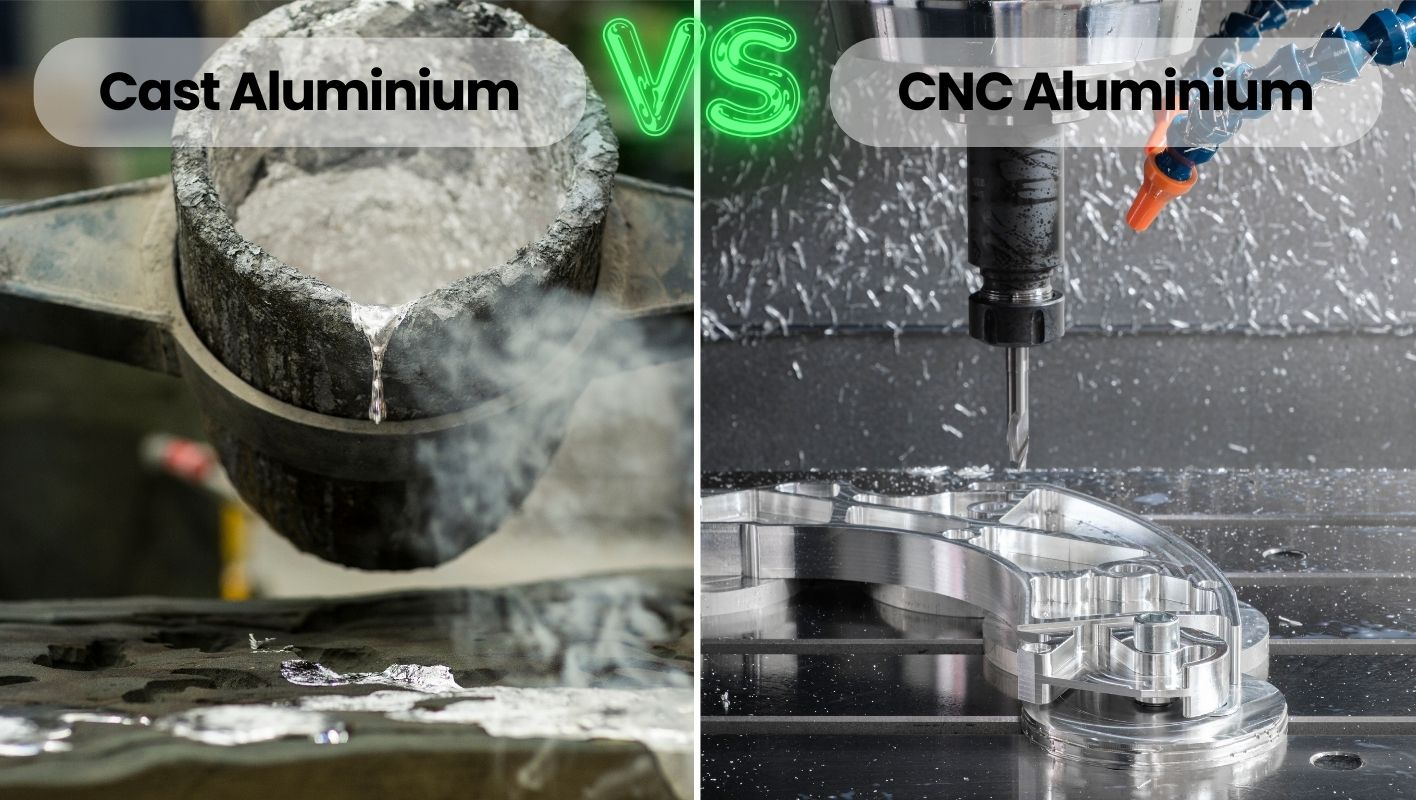
Ever wondered how the aluminum in your project gets its unique shape and strength?
Cast aluminum is perfect for crafting intricate shapes and large batches on a budget, whereas CNC machined aluminum excels in delivering unmatched precision and robustness for high-performance needs.
I remember the first time I had to choose between cast and CNC machined aluminum. It felt like standing at a crossroads, each path promising different benefits. Cast aluminum, with its ability to create complex shapes and cost-effective production for large quantities, seemed ideal for projects with tight budgets and intricate designs. But then, CNC machined aluminum came into play, offering exceptional precision and strength, qualities crucial for high-performance applications.
As I weighed my options, it became clear that the choice depended on the specific demands of the project at hand. Whether it was a small batch requiring meticulous detail or a large order prioritizing cost efficiency, understanding these nuances made all the difference. Let’s explore these methods further to help you make the best decision for your project.
CNC aluminum is more precise than cast aluminum.True
CNC machining allows for higher precision and tighter tolerances.
Cast aluminum is more suitable for small production runs.False
Cast aluminum is better for large production runs due to cost efficiency.
What Are the Key Differences Between Cast and CNC Aluminium?
Choosing the right aluminum type can be like deciding between a Swiss Army knife and a scalpel—each has its unique strengths.
The key difference between cast and CNC aluminum is in their production. Cast aluminum is made by pouring molten metal into molds, perfect for complex shapes, while CNC aluminum is machined from solid blocks for precision and accuracy.
Production Methods
When I first ventured into the world of aluminum, the distinction between cast and CNC aluminum seemed like a puzzle. Imagine being a kid again, trying to decide between Lego sets and those intricate model kits. Both are fun, but they serve different purposes.
- Cast Aluminium: Picture this: you’re crafting with clay, shaping it into whatever form your imagination conjures. That’s akin to casting, where molten aluminum is poured into molds to cool and solidify. It’s like creating a sculpture from a single pour, ideal for intricate designs. But, just like my childhood clay creations sometimes ended up with unexpected air bubbles, castings might have porosity, which can impact their strength.
- CNC Aluminium: Now, think of a sculptor chiseling away at a marble block—each precise cut reveals the final masterpiece. CNC machining starts with a solid block of aluminum, meticulously carved out using computer-controlled tools. This process ensures each piece is accurate down to the tiniest detail, making it perfect for precision engineering projects1.
Material Properties
In the early days of exploring material properties, I found myself comparing them like I would apples to oranges—both valuable but distinctly different.
| Property | Cast Aluminium | CNC Aluminium |
|---|---|---|
| Density | Typically lower due to porosity | Consistent throughout |
| Tensile Strength | Lower | Higher |
| Surface Finish | May require post-processing | Smooth, ready-to-use |
Cost Implications
I remember the first time I had to budget for a project; it was all about balancing my enthusiasm with financial reality.
- Initial Costs: Casting usually comes with lower initial costs since there’s less material waste. But beware—mold creation can be a costly affair for smaller runs.
- Production Volume: When it comes to low to medium volumes, CNC machining shines bright like a diamond—no need for those pricey molds.
Applications and Suitability
It’s funny how choosing aluminum can sometimes feel like picking the right tool for cooking—a whisk for fluffy eggs or a spatula for flipping pancakes.
- Automotive Industry: Cast aluminum is a frequent guest in my automotive projects, especially when complex shapes like engine blocks are required.
- Aerospace Sector: Precision is the name of the game here, and CNC machined aluminum takes the crown, especially when strength is non-negotiable.
- Prototyping: For those quick, detailed designs without the hassle of molds, CNC machining is my go-to for prototyping.
Understanding these differences helps me select the right type of aluminum for specific needs. It’s all about striking that perfect balance between cost and quality or achieving those precise specifications. In modern manufacturing processes2, both casting and CNC have their rightful places.
Cast aluminum has higher tensile strength than CNC aluminum.False
CNC aluminum generally has higher tensile strength due to its consistent density.
CNC aluminum is more cost-effective for low production volumes.True
CNC machining avoids mold costs, making it suitable for low to medium volumes.
How Does Cost Affect the Choice Between Cast and CNC Aluminium?
Choosing the right aluminium manufacturing process can feel like a tightrope walk between cost and quality.
Cost affects the choice between cast and CNC aluminium by determining production volume, material expenses, and labor costs. Cast aluminium is typically cheaper for high-volume runs, while CNC offers unmatched precision for smaller batches.
Understanding Cost Components
When I first started exploring the world of aluminium manufacturing3, I quickly realized that cost is like the hidden puppet master in decision-making. With cast aluminium, you get the benefit of lower initial tooling costs, but if your design is complex, those setup fees can sneak up on you. CNC machining is a different beast altogether. Its initial costs might make you gulp because of the precision equipment involved, but oh, the detailing it offers! It’s like comparing a bicycle to a spaceship.
| Cost Element | Cast Aluminium | CNC Aluminium |
|---|---|---|
| Tooling | Low | High |
| Setup Fees | Moderate | Low |
| Material Waste | High | Low |
| Labor Costs | Low | High |
Volume and Production Efficiency
There was this one time I needed a truckload of parts for a project—casting was the hero of the day. It’s perfect for those massive volumes because of the economies of scale; your setup costs spread over so many units that you end up saving per piece. But then again, when I worked on a project where each part had to be flawless, CNC machining was my go-to. It’s like having a chef who can cook your steak exactly as you want it every single time.
Material and Operational Expenses
I remember being floored by how much material wastage casting could generate—like watching dollar bills float away. CNC machining, on the other hand, is all about precision and minimal waste. It’s like a meticulous artist chipping away only what’s necessary, making sure not to squander a single ounce more than needed.
- Material Utilization: CNC processes are champions at minimizing waste by cutting away only what is necessary.
- Labor: Sure, CNC requires skilled operators, which bumps up labor costs compared to the semi-automated casting process.
Flexibility in Design
If I had to pick a star player for flexibility, CNC would take home the trophy. Its accuracy is unbeatable, especially for those designs where every millimeter counts. Casting feels more like an old friend when it comes to standard shapes in bulk—once the mold is set, it’s game on. But make changes? Well, that’s not its strong suit.
Conclusion
So here’s what I’ve learned: if your project demands precision above all else, CNC machining4 is worth every penny despite its steeper initial costs. But if you’re in it for high-volume production where you can spread out those setup costs, cast aluminium is your best bet.
Ultimately, the choice between these methods boils down to what your project really needs—volume, complexity, or precision. Understanding these factors will help steer you in the right direction. And trust me, diving into manufacturing strategies5 will only enrich your knowledge further.
Cast aluminium has higher material waste than CNC.True
Casting uses more material due to the molding process, increasing waste.
CNC machining is cheaper for high-volume production.False
Casting is more cost-effective for high volumes due to economies of scale.
Where Does Cast Aluminum Truly Shine?
Imagine the excitement of discovering a material that’s as light as a feather yet strong enough to build an airplane! That’s cast aluminum for you. Let’s dive into its remarkable uses.
Cast aluminum shines in automotive parts, aerospace structures, and industrial equipment due to its lightweight nature, corrosion resistance, and superb thermal conductivity. These attributes make it perfect for high-performance, durable applications.
Automotive Components
I remember the first time I realized how crucial cast aluminum is in cars—it was during a project where we needed to trim weight off without sacrificing strength. Cast aluminum in engine blocks and cylinder heads was a game-changer. Not only did it enhance fuel efficiency by lightening the load, but its thermal conductivity6 played a pivotal role in keeping everything cool under the hood.
| Automotive Application | Benefits of Cast Aluminum |
|---|---|
| Engine Blocks | Lightweight, heat resistance |
| Cylinder Heads | Corrosion resistance, precision casting |
| Transmission Cases | Durability, cost-effectiveness |
Aerospace Structures
Thinking back to a project with aircraft parts, I was amazed by how cast aluminum transformed our approach to designing fuselage components and landing gear. Its incredible corrosion resistance7 meant these parts could withstand harsh environments, while the high strength-to-weight ratio supported greater payload capacity and fuel efficiency.
Industrial Equipment
In one of my ventures into industrial machinery, I saw firsthand how cast aluminum’s machinability made it ideal for components like pumps and valves. Its resistance to chemical exposure8 was another bonus, making it a staple in environments where durability is key.
Construction and Architecture
Outside of heavy industry, I’ve also found cast aluminum’s aesthetic charm hard to resist. From decorative panels to railings, its appeal and weather-resistant properties have made it a favorite in modern architecture. Its versatility helps create stunning designs that are both beautiful and durable.
By tapping into these applications, professionals like Daniel can optimize material selection9 for projects, ensuring they meet performance and budget requirements. Staying on top of industry trends allows us to harness the full potential of cast aluminum across various sectors.
Cast aluminum is primarily used in automotive interiors.False
Cast aluminum is mainly used for engine blocks, cylinder heads, and transmission cases.
Aerospace structures benefit from cast aluminum's corrosion resistance.True
Its corrosion resistance ensures longevity in harsh environments, crucial for aerospace.
Why Choose CNC Aluminium for Precision and Strength?
Ever wondered why CNC aluminium is the backbone of precision engineering?
CNC aluminium is prized for its exceptional precision and strength, thanks to its excellent strength-to-weight ratio, superior machinability, and inherent corrosion resistance. These properties make it an ideal choice across various industries demanding accuracy and durability.
The Strength-to-Weight Ratio10
I remember the first time I handled a CNC aluminium component. It was for a project where weight was as crucial as strength. This material struck a perfect balance—it was light enough to enhance efficiency yet robust enough to withstand rigorous demands. In sectors like aerospace and automotive, this balance transforms performance, allowing engineers to innovate without the burden of excess weight.
Machinability and Accuracy11
One of my early mentors often said, "A material that plays nice with machines makes all the difference." Aluminium embodies this truth. Its machinability means I can create intricate designs with precision, a necessity in projects where each fraction of a millimeter counts. Whether it’s crafting components for cutting-edge electronics or robotics, the precision aluminium offers is non-negotiable.
Corrosion Resistance12
Working in environments that test every material’s limits taught me to appreciate aluminium’s natural corrosion resistance. Imagine not needing to worry about rust or degradation when moisture or chemicals are present—that’s peace of mind. This quality not only saves on protective coatings but also ensures longevity, a factor I value in long-term projects.
| Property | Aluminium |
|---|---|
| Strength-to-Weight | Excellent |
| Machinability | High |
| Corrosion Resistance | Naturally High |
Applications Across Industries
I’ve seen CNC aluminium shine in diverse settings. In the automotive sector13, its lightweight strength is perfect for engine parts and structural components. In aerospace, it’s indispensable for crafting fuselage and wing structures, where every ounce counts. Even in consumer electronics, aluminium isn’t just about aesthetics; it’s about durability too—think sleek laptops and smartphones that can withstand the test of time.
CNC aluminium is lighter than steel.True
Aluminium's strength-to-weight ratio makes it lighter yet strong, unlike steel.
CNC aluminium requires additional coatings for corrosion resistance.False
Aluminium naturally resists corrosion, eliminating the need for extra coatings.
Conclusion
Cast aluminum is cost-effective for large batches and complex shapes, while CNC aluminum offers precision and strength for high-performance applications. Choose based on project needs.
-
Discover how CNC aluminum’s precision benefits engineering projects, ensuring high-quality outcomes. ↩
-
Explore the role of casting and CNC processes in modern manufacturing to understand their applications better. ↩
-
Explore detailed analyses of cost implications between cast and CNC aluminium to understand which suits your project’s budget. ↩
-
Learn how CNC machining offers unmatched precision in manufacturing complex parts and the cost-benefit of choosing this method. ↩
-
Discover comprehensive insights into different manufacturing strategies to make informed decisions on material choice. ↩
-
Discover how cast aluminum enhances engine efficiency through its lightweight nature and thermal properties. ↩
-
Learn about the advantages of using cast aluminum in aerospace for improved strength and corrosion resistance. ↩
-
Explore the benefits of cast aluminum’s resistance to chemicals and excellent machinability in industrial settings. ↩
-
Gain insights into selecting the right materials like cast aluminum to enhance project efficiency and sustainability. ↩
-
Discover how aluminium’s strength-to-weight ratio optimizes performance in various applications. ↩
-
Learn about aluminium’s machinability and why it’s ideal for precision engineering. ↩
-
Understand the natural corrosion resistance of aluminium and its benefits. ↩
-
Explore how aluminium enhances automotive design through strength and weight advantages. ↩






