
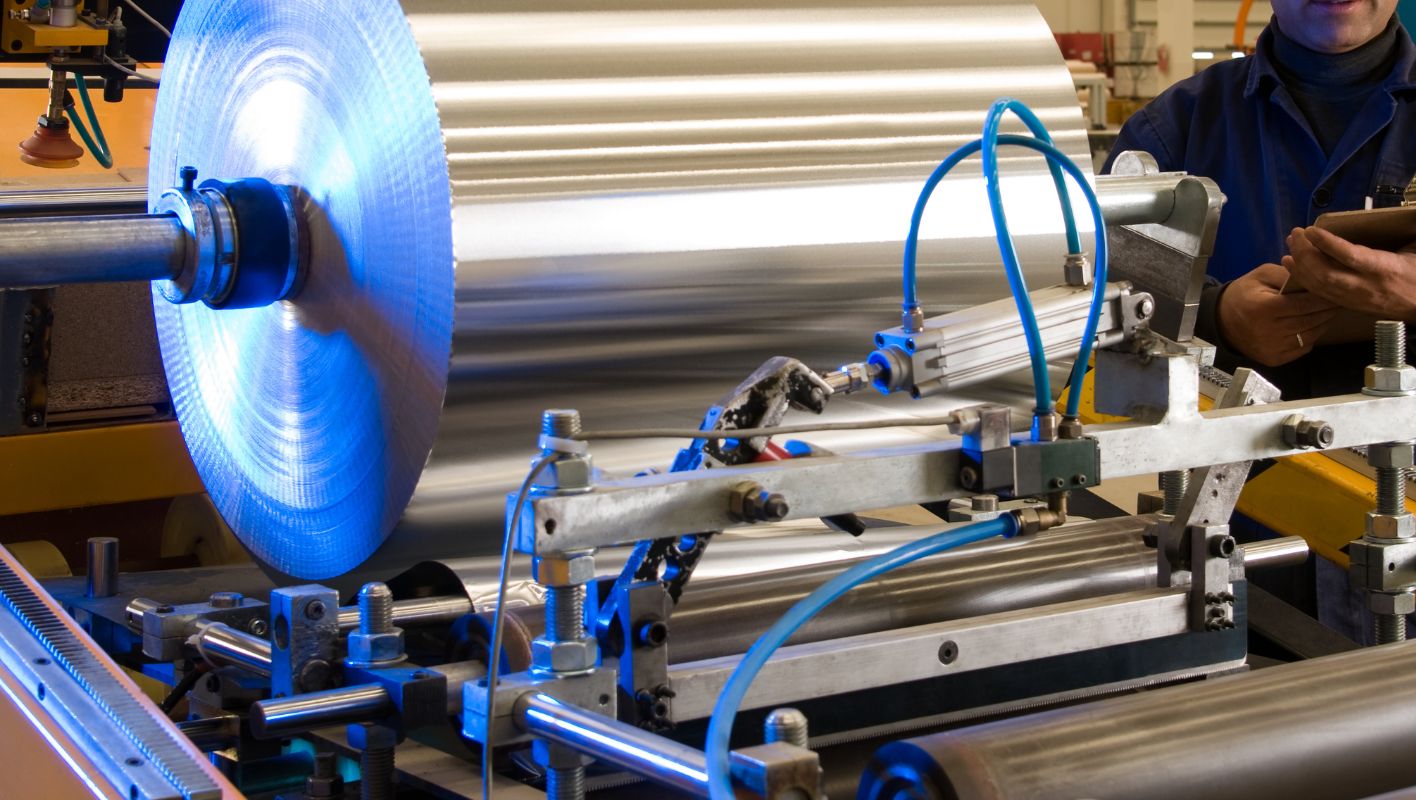
Imagine transforming a chunk of raw aluminum into sleek, shiny sheets used in cars and planes.
The aluminum rolling process involves passing raw aluminum through rolling mills to reduce its thickness and transform it into sheets or other forms. This process is essential for producing high-quality aluminum products used in various industries, from automotive to aerospace.
I remember my first encounter with the roaring giants known as rolling mills. Walking through the factory, the whirring and clanking were music to my ears—a symphony of innovation. These machines are the heart of the aluminum rolling process, where raw aluminum is transformed under intense pressure and heat. It’s a fascinating dance between machinery and metal.
But it’s not just about brute force. There’s an art to maintaining quality throughout. Temperature control is crucial—too hot or too cold, and the aluminum won’t roll out correctly. And don’t get me started on the skill required to operate these beasts; it’s an art in itself, a blend of science and intuition that ensures we deliver products that meet even the most stringent standards.
Aluminum rolling reduces aluminum thickness.True
The process involves passing raw aluminum through mills to thin it.
Heating is unnecessary in aluminum rolling.False
Heating techniques are crucial to make aluminum malleable for rolling.
How Does Aluminum Rolling Work?
Ever wonder how a solid block of aluminum transforms into the shiny, thin sheets we use every day?
Aluminum rolling is the process where bulky aluminum slabs are pressed between rolls to reduce thickness and enhance their surface finish. This method requires exact temperature control and specialized equipment to achieve the desired mechanical properties.
The Initial Stages of Aluminum Rolling
I still remember the first time I saw the massive aluminum ingots being prepped for rolling. These huge slabs, heated to about 500°C, looked like glowing giants ready to be tamed. This pre-heating1 phase ensures the metal is soft enough for the roller’s embrace.
| Stage | Description |
|---|---|
| Pre-heating | Heating the ingots to improve ductility for rolling. |
| Roughing | Initial passes that significantly reduce thickness. |
During the roughing stage, I watched in awe as these hot ingots were gradually squeezed through a series of rollers. Each pass through those rollers made them noticeably thinner, like magic but with a lot of heat and pressure.
Precision and Control in Rolling Mills
Working in a cold rolling mill2, I’ve witnessed how critical precision is to our craft. Unlike hot rolling, cold rolling happens at room temperature, which may sound mundane, but it’s actually where the real art lies. Achieving the perfect surface finish and strength requires meticulous calibration.
Rolling mills must be meticulously calibrated to apply uniform pressure and ensure consistency across the sheet’s width. Using advanced control systems helps maintain this precision—it’s like orchestrating a symphony, where every note—or rather, every roll—must be perfect.
The Importance of Temperature Control
Temperature isn’t just a number in aluminum rolling; it’s a conductor of sorts. During hot rolling3, we have to keep a close eye on it to ensure everything runs smoothly. Imagine baking a cake—too hot or too cold, and you end up with something inedible.
| Parameter | Impact |
|---|---|
| Temperature | Influences ductility and strength |
| Roll Pressure | Affects thickness consistency |
I’ve learned from experience that understanding these parameters is crucial not just for quality but also for ensuring our products meet strict standards like those John cares about.
Advanced Techniques and Innovations
I’ve always been fascinated by how modern techniques like continuous casting4 make our work more efficient. By integrating casting and rolling, we cut down on energy use—a win for sustainability and productivity.
Being part of this industry means staying ahead of innovations that not only improve efficiency but also align with eco-friendly goals. It’s exciting to think about how these advancements help procurement professionals like John choose suppliers that are both technically adept and environmentally conscious.
Through all these stages—from pre-heating to innovation—aluminum rolling remains a captivating dance of science and art. It’s this balance that keeps me passionate about sharing insights into this world.
Aluminum ingots are heated to 500°C in pre-heating.True
Pre-heating makes aluminum malleable for rolling.
Cold rolling occurs at high temperatures.False
Cold rolling happens at room temperature, not high temperatures.
What Machinery Powers Aluminum Rolling?
Picture this: aluminum transforming from raw blocks into sleek, shiny sheets. It’s not magic, but a symphony of machinery that makes it happen.
In aluminum rolling, machinery like hot and cold rolling mills, along with finishing mills, play key roles in shaping aluminum into various forms like sheets, plates, and foils.
Hot Rolling Mills
I remember the first time I stepped into a rolling mill. The sheer size and complexity of the machines were overwhelming. Imagine standing next to a hot rolling mill, where the aluminum is heated beyond its recrystallization point. It’s like watching a master sculptor at work, transforming rough metal into something precise and beautiful. These mills are the starting point of our journey, using advanced control systems5 to perfect every detail.
Cold Rolling Mills
Moving on to cold rolling mills, I was equally fascinated by their precision. Working at room temperature, these machines take the already rolled aluminum and refine it further. The goal? To achieve a flawless surface finish and enhance its mechanical properties. It’s akin to polishing a diamond until it sparkles, with precision rollers6 ensuring every inch is uniformly treated.
| Cold Rolling Mill Components | Function |
|---|---|
| Rollers | Apply pressure |
| Coolants | Reduce heat |
| Sensors | Monitor thickness |
Finishing Mills
Next up are the finishing mills, the final touch before our product is ready for the world. These machines ensure that the aluminum meets the highest standards through tension levelers and slitters. The consistency and quality they deliver with automated systems7 are nothing short of impressive.
Additional Machinery
- Annealing Furnaces: Soften aluminum between stages.
- Coilers and Decoilers: Manage the flow of material seamlessly during processing.
- Inspectors: Use optical systems8 to guarantee quality by catching even the smallest defects.
Understanding these machines isn’t just about knowing their functions; it’s about appreciating the artistry and precision involved in aluminum rolling. For professionals like John, it’s this blend of technology and craftsmanship that drives excellence in manufacturing.
Hot rolling mills heat aluminum above recrystallization temperature.True
This is true as hot rolling mills heat aluminum to make it malleable.
Cold rolling mills operate at high temperatures.False
False, cold rolling mills work at room temperature for surface finish.
Why is Heating Important in the Aluminum Rolling Process?
Ever wondered why heating is the unsung hero in the aluminum rolling process?
Heating is essential in the aluminum rolling process as it softens the metal, enhancing ductility and preventing cracks. This ensures a high-quality finish and consistent thickness, crucial for industries requiring precise metal components.
The Role of Heating in Ductility Enhancement
You know, when I first got into metal processing, I was amazed at how heating transforms aluminum into something so pliable and adaptable. Without it, we’d be dealing with cracked sheets and uneven surfaces—a nightmare for anyone in manufacturing. Take the automotive industry, for example. It’s all about precision. By heating aluminum just right, we ensure it bends and stretches without a hitch, keeping those car parts perfectly uniform.
For instance, in the automotive industry, uniformity in rolled aluminum is essential for parts that require precise measurements. By heating the aluminum to optimal temperatures, manufacturers ensure that it maintains its shape and integrity during rolling.
| Parameter | Cold Rolling | Hot Rolling |
|---|---|---|
| Ductility | Low | High |
| Surface Finish | Smooth | Variable |
| Energy Consumption | Lower | Higher |
Preventing Defects with Controlled Heating
I remember a project where we underestimated the importance of controlled heating—cracks and imperfections everywhere! In sectors like aerospace, where even the tiniest defect can spell disaster, getting the heating just right is non-negotiable. Proper heating lets aluminum flow smoothly, reducing defects and ensuring the material’s integrity. It’s like baking a cake; too hot or too cold, and you end up with a mess.
Consider the aerospace industry, where material integrity is paramount. Even minor defects can lead to failures in structural components. Thus, controlled heating not only prevents such defects9 but also enhances the overall quality of the end product.
Achieving Desired Mechanical Properties
The magic of heating lies in its ability to tweak aluminum’s microstructure, affecting strength and hardness. Adjusting temperatures during rolling means we can fine-tune these properties to meet specific needs. Picture this: in industrial machinery, components must endure intense stresses. With precise heat control, we tailor their strength to withstand such demands.
Moreover, each alloy dances differently to the heat’s tune. Understanding these subtle differences lets us create processes that bring out the best in each alloy.
| Alloy Type | Ideal Temperature (°C) | Key Benefits |
|---|---|---|
| 1000 Series | 200-300 | Enhanced Ductility |
| 6000 Series | 350-450 | Improved Hardness |
| 7000 Series | 400-500 | Increased Strength |
In conclusion, while heating is a critical step in the aluminum rolling process, its exact parameters and effects can vary based on application needs and material characteristics. But believe me, mastering this step is like unlocking a whole new level of quality and performance in metal processing.
Heating aluminum improves its ductility for rolling.True
Heating makes aluminum more ductile, allowing it to be stretched without breaking.
Cold rolling consumes more energy than hot rolling.False
Cold rolling consumes less energy than hot rolling due to lower temperatures.
How Does Aluminum Rolling Ensure Quality and Sustainability?
When I first stepped into the world of aluminum rolling, I was captivated by its blend of artistry and technology, ensuring high-quality, eco-friendly outcomes.
Aluminum rolling guarantees quality by precisely controlling thickness and surface finish, while achieving sustainability through energy-efficient processes and recycling. These methods reduce waste and environmental impact, vital for eco-conscious manufacturing.
Precision in Aluminum Rolling
I remember the first time I watched an aluminum slab transform under the rollers. It was like seeing a sculptor at work, meticulously shaving layers to achieve the perfect form. The precision required is astonishing—every fraction of a millimeter counts. This meticulous process directly affects the product’s durability10 and appearance of the final product, much like how a chef’s attention to detail enhances a dish’s flavor and presentation. Advanced machinery takes center stage here, ensuring that each batch maintains a uniform thickness and finish.
Enhancing Quality Standards
I’ve always marveled at how aluminum can be both strong and flexible, a testament to the precise rolling techniques employed. Imagine a blacksmith from centuries past, who knew exactly how much heat and hammering it took to craft a sword that could bend without breaking. Today, manufacturers use controlled temperatures and pressures to achieve the desired mechanical properties, adhering to stringent standards like ISO 9001.
| Quality Factors | Importance |
|---|---|
| Consistent Thickness | Uniformity across production |
| Surface Finish | Aesthetic and functional |
| Mechanical Properties | Strength and flexibility |
Sustainable Rolling Practices
Sustainability is not just a buzzword; it’s a responsibility I feel deeply about. Picture a state-of-the-art rolling mill where every piece of energy is used judiciously, akin to how a chef uses every part of an ingredient. Modern facilities harness cutting-edge technologies to minimize energy consumption during rolling. Plus, recycling aluminum scrap during production plays a crucial role in reducing waste.
Recycling and Environmental Impact
Recycling aluminum is like turning yesterday’s newspaper into tomorrow’s masterpiece, requiring up to 95% less energy than creating new aluminum. This energy savings means fewer carbon emissions, making aluminum rolling an eco-friendly choice11 for sustainability-focused manufacturers.
- Energy Savings: Up to 95% less energy used in recycling compared to new production.
- Waste Reduction: Recycling programs ensure minimal material loss.
Industry Trends
In recent years, I’ve seen AI and machine learning step into the limelight, revolutionizing how we achieve precision in rolling processes. It’s like having a sous-chef who can predict exactly when the roast will be perfect. This technological leap not only boosts quality but also optimizes resource use, aligning perfectly with sustainability goals.
Explore more about aluminum recycling12, a cornerstone of sustainable manufacturing practices.
By leveraging these advanced techniques, the aluminum industry continues to set benchmarks for quality assurance and environmental responsibility, driving forward both economic and ecological benefits.
Aluminum rolling reduces product thickness.True
The process involves passing slabs between rolls to decrease thickness.
Recycling aluminum uses more energy than new production.False
Recycling requires up to 95% less energy compared to primary production.
Conclusion
The aluminum rolling process transforms raw aluminum into sheets through controlled heating and pressure, ensuring quality, precision, and sustainability for various industries like automotive and aerospace.
-
Discover how pre-heating enhances aluminum’s ductility for improved rolling performance. ↩
-
Learn about the advantages of cold rolling in achieving fine surface finish and increased strength. ↩
-
Explore how precise temperature control impacts aluminum’s structural integrity during rolling. ↩
-
Understand how continuous casting enhances efficiency and sustainability in aluminum production. ↩
-
Explore the latest advancements in hot rolling mills technology to optimize aluminum processing. ↩
-
Learn about precision rollers used in cold rolling mills for uniform thickness control. ↩
-
Discover how automation systems in finishing mills improve aluminum product quality. ↩
-
Find out how optical inspection systems ensure defect-free aluminum sheets. ↩
-
Learn about common defects in aluminum rolling and how controlled heating prevents them. ↩
-
Explore how maintaining precise control over thickness and surface finish directly influences the durability of aluminum products. ↩
-
Understand the environmental benefits of recycling aluminum, including energy savings and reduced emissions. ↩
-
Discover how aluminum recycling supports sustainable manufacturing practices through significant energy savings and reduced waste. ↩






