
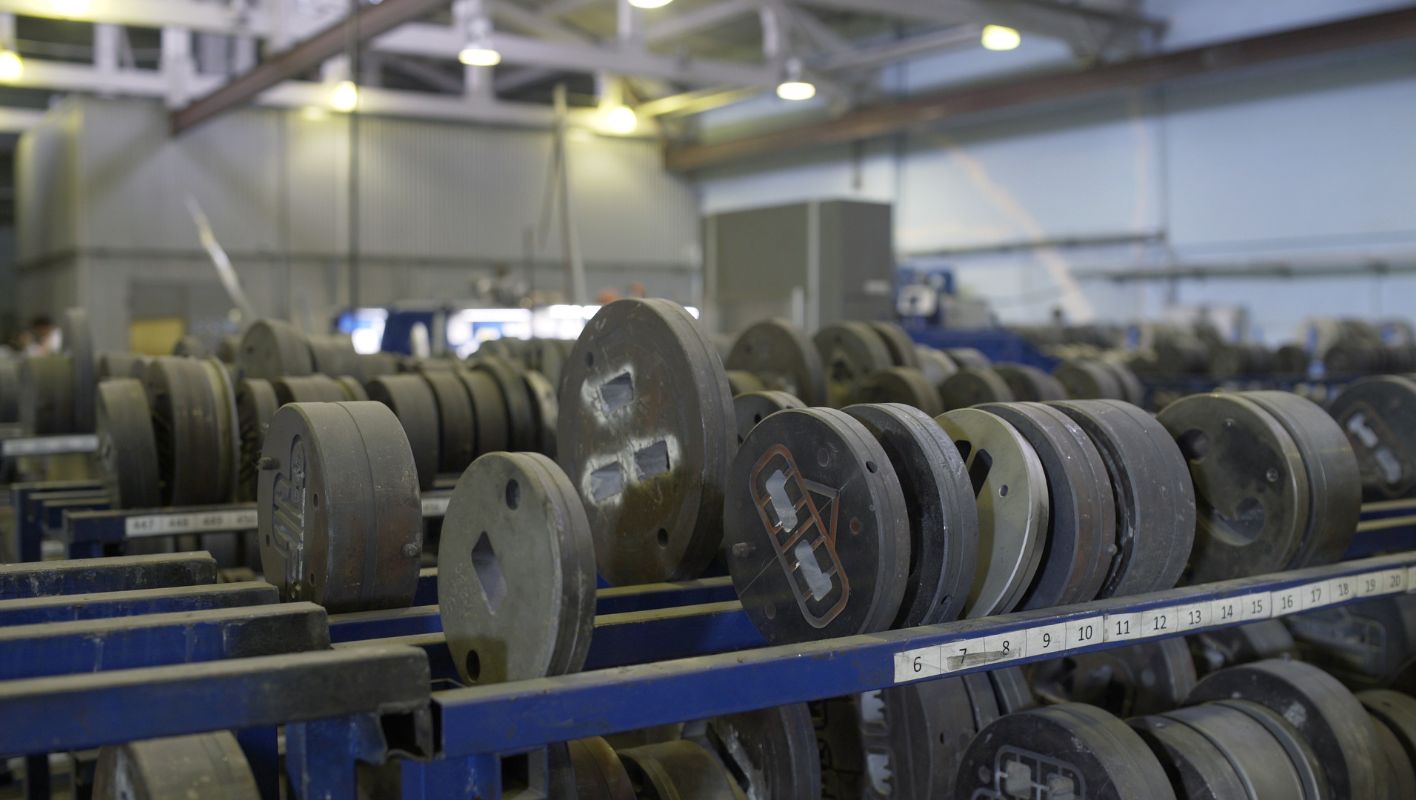
When I first dived into aluminium extrusion, the mystery of the die intrigued me more than anything else.
A die in aluminium extrusion is a unique tool that shapes aluminium into specific profiles by pushing it through the die’s opening.
I remember standing in a bustling factory, watching in awe as raw aluminium transformed into sleek profiles. It was the die that performed this magic. These dies, crafted with precision, are the heart of the extrusion process, shaping material into complex forms we see in everyday life. From my experience, understanding different die types and their applications can be a game-changer for optimizing production and ensuring quality outputs.
A die in aluminium extrusion shapes the metal into profiles.True
Dies determine the final shape by directing aluminium flow.
Aluminium extrusion does not use dies for shaping.False
Dies are essential for creating specific shapes in extrusion.
How Does a Die Work in Aluminium Extrusion?
Ever wondered how something as tough as aluminium gets its sleek shapes? Dive into the fascinating world of extrusion dies with me.
In aluminium extrusion, a die is like a mold made from high-grade steel that shapes heated aluminium billets into specific profiles. It does this by pushing the aluminium through under high pressure, crafting it precisely.
Understanding the Die’s Role in Aluminium Extrusion
I still remember the first time I saw an aluminium extrusion process1 up close. It was mesmerizing to watch this raw, glowing billet transform as it was pushed through a die, emerging as a sleek, defined profile. The die, in essence, serves as the blueprint, dictating the shape of the final product.
The process kicks off by heating an aluminium billet to about 800°F (427°C). This heated billet is then forcefully extruded through a die using a hydraulic press. Imagine squeezing toothpaste from a tube—that’s how the die operates, giving the aluminium its cross-sectional profile.
Key Components of a Die:
- Die Plate: This is where the magic happens. It’s crafted from hardened steel and withstands immense pressure to shape the aluminium precisely.
- Die Backer: Think of it as the die plate’s trusty sidekick, providing support to prevent any unwanted warping or deformation.
- Bolster and Container: They keep everything in place, ensuring that the billet moves evenly through the die plate.
| Component | Function |
|---|---|
| Die Plate | Shapes the aluminium profile |
| Die Backer | Provides support and prevents deformation |
| Bolster & Container | Ensures even distribution and stability during extrusion |
Types of Dies Used
I’ve always been fascinated by how different dies cater to varying needs. For instance, a simple solid die might be used for basic rods or bars. But when you’re aiming for more complex shapes—say, hollow profiles like tubes—hollow dies2 with mandrels come into play. These mandrels are supported by bridges within the die, allowing for those intricate hollow designs.
- Solid Dies: Perfect for straightforward sections.
- Hollow Dies: Ideal for creating intricate hollow profiles.
- Semi-Hollow Dies: These tackle profiles with partial hollows or complex shapes.
Understanding these die types is crucial, especially if you’re looking to tailor them for specific applications.
Advanced Techniques and Considerations
Designing a die isn’t just about choosing the right type. Engineers have to consider several factors:
- Material Flow: Ensuring the aluminium flows uniformly is key to avoiding defects.
- Cooling Rates: Controlled cooling is vital to prevent warping and maintain structural integrity.
- Surface Finish: The finish of the dies can significantly impact the final look of the extruded product.
The material choice for the die, typically H13 steel, is also critical due to its resilience under high temperatures and pressures. It’s amazing how this seemingly simple tool can have such a profound impact on production efficiency and product quality.
Dive deeper into how die design impacts extrusion efficiency3 and discover innovative approaches that are redefining industry standards.
Die plates are made from hardened steel.True
Hardened steel is used for die plates to ensure durability under pressure.
Solid dies create hollow aluminium profiles.False
Solid dies are used for simple, solid sections, not hollow profiles.
What Are the Different Types of Dies Used in Aluminum Extrusion?
Ever wondered how the magic of aluminum extrusion happens?
In aluminum extrusion, dies come in three main types: solid, hollow, and semi-hollow. Each die type serves a specific purpose, influencing the profile’s complexity, material flow, and final shape.
I remember the first time I walked into an aluminum extrusion plant. It was like stepping into a world where raw aluminum transformed into sleek profiles that would eventually become parts of cars or planes. One of the things that truly fascinated me was how each profile required a different type of die, each tailored to suit its specific needs.
Solid Dies
Solid dies are pretty straightforward—they’re used for profiles without any enclosed voids. I once worked on a project requiring window frames, and these dies were perfect for crafting those simple yet essential shapes.
Common Applications:
- Window frames
- Flat bars
- Angles
Hollow Dies
Then there are hollow dies, which are a bit more complex. These dies create profiles with one or more voids. I recall a time when I was involved in producing tubing for an industrial project, and the intricacies of designing these dies to control material flow around the mandrel were truly something to behold.
Common Applications:
- Tubing
- Pipes
- Complex cross-sections like heat exchangers
Semi-Hollow Dies
Semi-hollow dies sit somewhere between solid and hollow dies. They’re like the middle child in the die family, creating profiles with partial voids. I’ve found them incredibly useful for balancing strength and weight in structural components, especially in the automotive sector.
Common Applications:
- Structural components
- Automotive parts
- Aerospace sections
Comparing Die Types
To put it all into perspective, here’s a quick comparison:
| Die Type | Complexity | Common Use Cases | Material Efficiency |
|---|---|---|---|
| Solid | Low | Basic structural shapes | High |
| Hollow | High | Tubes, pipes | Medium |
| Semi-Hollow | Medium | Lightweight structures | Medium |
Choosing the right die isn’t just about picking one off the shelf; it’s about understanding your project’s specific needs. When you’re knee-deep in an extrusion project4, collaborating with experts ensures you select the perfect die type, optimizing both quality and efficiency. It’s like piecing together a puzzle, where every part must fit perfectly to achieve that seamless finish we all aim for in manufacturing.
Solid dies are used for profiles with enclosed voids.False
Solid dies create profiles without enclosed voids, unlike hollow dies.
Hollow dies manage material flow using a mandrel.True
Hollow dies require a mandrel to manage material flow around voids.
How is a Die Constructed for Aluminium Extrusion?
Ever wondered how a simple block of aluminium becomes a precisely shaped tool? Let me take you through the fascinating journey of die construction in aluminium extrusion.
Constructing an aluminium extrusion die is a meticulous process involving precision engineering, from design to material selection, CNC machining, and heat treatment. These dies are essential for shaping aluminium into specific profiles by pressing it through custom-designed openings.
Design Phase
I’ve always been fascinated by how something as straightforward as an aluminium profile begins its journey. It all starts in the design phase5, where engineers roll up their sleeves to draft intricate blueprints. Using advanced CAD software, they meticulously plan every detail, ensuring that the die will meet exacting requirements. It’s much like planning a road trip—every twist and turn needs to be accounted for before setting out.
Material Selection
Choosing the right material feels a bit like picking the perfect pair of hiking boots. The durability and resistance to high pressures and temperatures are vital, so high-strength steels like H13 or H11 are typically the go-to options. Think of it as choosing a trusty companion that won’t let you down no matter how rough the trail gets.
| Material | Characteristics |
|---|---|
| H13 Steel | High toughness, heat resistance |
| H11 Steel | Superior wear resistance |
CNC Machining
Once the design is set and the materials are chosen, CNC machining takes center stage. Imagine carving a masterpiece from a solid block—this is what happens here, but with machines that offer pinpoint accuracy. Each cut and carve ensures that the die will produce consistent quality in every aluminium extrusion.
Heat Treatment
The next step is heat treatment, which I liken to baking a loaf of bread. You have to get the temperature just right to ensure it comes out strong and resilient. Through heating and rapid cooling, known as quenching, the die gains the strength needed to handle industrial pressures6.
Quality Assurance
Before any die goes into action, it undergoes rigorous quality assurance checks. This step reminds me of my careful pre-trip car checks—ensuring every aspect is in tip-top shape. From laser measurements to test extrusions, every specification is verified to prevent costly mishaps during production runs7. Adhering to international certifications like ISO 9001 further guarantees that each die meets high-quality standards, reinforcing trust and reliability in our products.
H13 steel is used for its heat resistance in die construction.True
H13 steel's heat resistance makes it ideal for withstanding extrusion pressures.
CNC machining is unnecessary for die accuracy.False
CNC machining ensures high precision, crucial for maintaining die quality.
Why is Die Maintenance Crucial in Aluminum Extrusion?
Imagine the thrill of seeing a flawless aluminum extrusion emerge from a well-maintained die. It’s the result of dedication and precision.
Die maintenance in aluminum extrusion is essential to minimize downtime, ensure product quality, and extend die life. Routine upkeep helps prevent defects and boosts efficiency.
Ensuring Product Quality
I remember a time when a single overlooked maintenance check led to a costly batch of defective extrusions. Keeping dies in top condition is essential for avoiding surface defects like cracks or irregularities. This precision is crucial for industries that demand high precision components8.
Reducing Downtime
Unexpected downtime can throw a wrench into even the best-laid production plans. I’ve learned that regular maintenance routines not only help predict potential issues but also keep production humming along smoothly. This proactive approach saves precious time and boosts overall efficiency.
Extending Die Life
Extending the life of extrusion dies is another benefit I’ve come to appreciate. By regularly inspecting and servicing the dies, companies can delay replacements, which is both cost-effective and environmentally friendly.
Cost Implications
I’ve seen firsthand how proper die maintenance can lead to significant cost savings. By minimizing defects and downtimes, the expenses related to scrap and rework are reduced. Plus, extending die life lowers the need for new purchases, making operations more economically viable9.
| Maintenance Practice | Benefit |
|---|---|
| Regular Cleaning | Prevents build-up and clogging |
| Precision Grinding | Maintains accuracy and shape |
| Surface Coating | Enhances durability |
Adoption of Advanced Technologies
With technology advancing at a rapid pace, I’ve noticed a shift in maintenance practices. Many companies now use predictive maintenance tools and automated systems to monitor die conditions in real-time. This approach has led to enhanced reliability and operational excellence10.
By understanding the importance of die maintenance, businesses can optimize their aluminum extrusion processes, ensuring they remain competitive and responsive to market demands. Proper maintenance practices are foundational for consistent quality, efficiency, and cost-effectiveness in the aluminum extrusion industry.
Die maintenance reduces aluminium extrusion defects.True
Regular die upkeep prevents surface defects, ensuring high-quality extrusions.
Ignoring die maintenance increases production efficiency.False
Neglecting maintenance leads to downtime and defects, reducing efficiency.
Conclusion
A die in aluminium extrusion shapes heated aluminium into specific profiles through high-pressure pushing, with various types like solid, hollow, and semi-hollow serving distinct applications.
-
Gain foundational knowledge on how aluminium extrusion transforms raw material into profiles. ↩
-
Understand how hollow dies create complex aluminium profiles with internal voids. ↩
-
Learn about the impact of die design on efficiency and quality in extrusion processes. ↩
-
Discover why consulting experts can enhance extrusion project success through tailored advice. ↩
-
Explore design aspects that ensure effective aluminium extrusion, including shape and tolerance considerations. ↩
-
Discover how aluminium extrusions are used across various industries to create products ranging from simple frames to complex components. ↩
-
Learn about the quality control measures implemented to ensure aluminium extrusion dies meet high standards. ↩
-
Discover why precision is critical in manufacturing components to understand the significance of maintaining die quality. ↩
-
Explore how regular die maintenance can lead to substantial cost savings by reducing defects and extending die lifespan. ↩
-
Learn about cutting-edge technologies enhancing die maintenance practices for improved reliability and efficiency. ↩






