
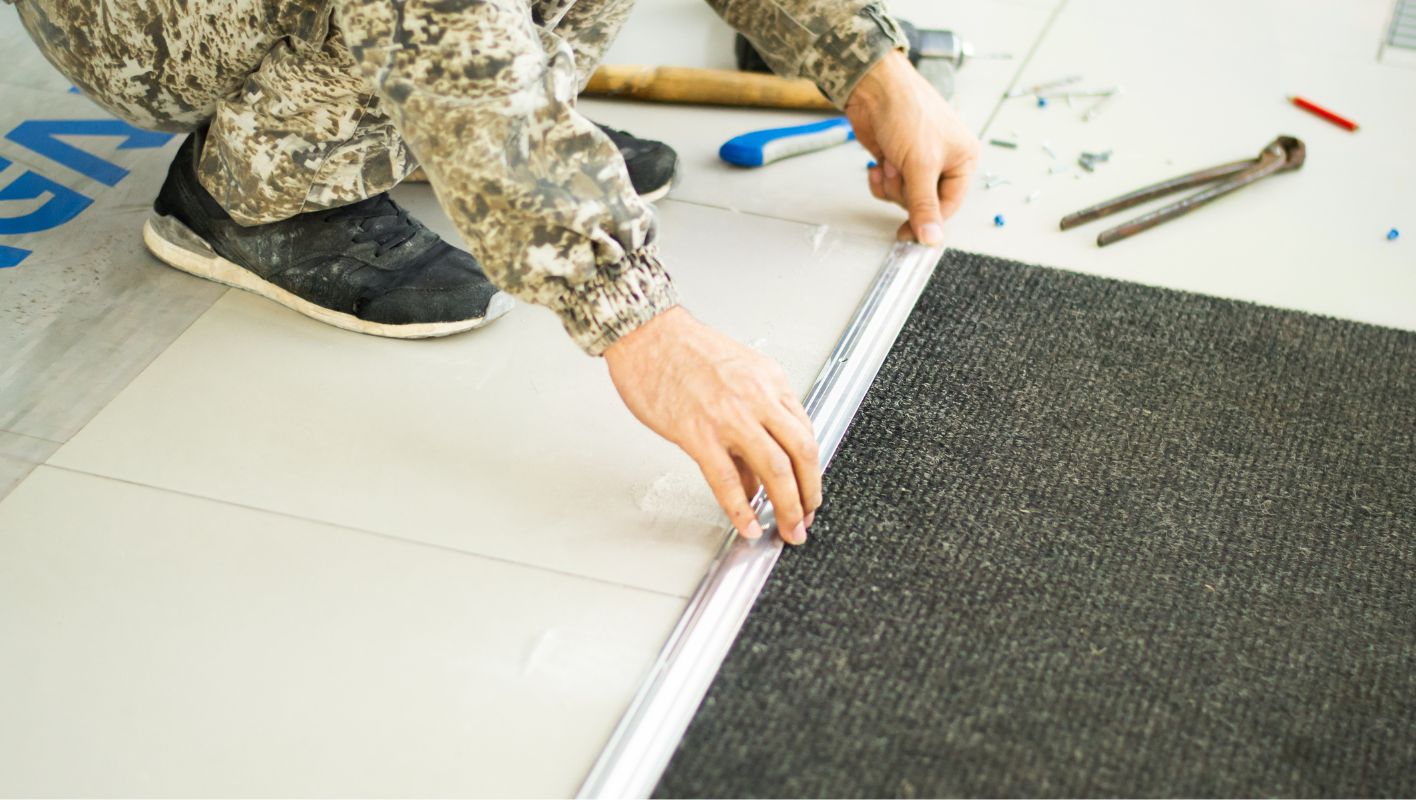
Picture this: you’re in the middle of a home renovation and faced with the puzzle of merging tile and carpet seamlessly.
The best tile to carpet transition options include using T-molding, reducer strips, or carpet edge grippers. These solutions address height differences and ensure a smooth transition between surfaces, enhancing both functionality and aesthetics.
I remember the first time I tackled a flooring project involving both tile and carpet. I was standing there, staring at the stark divide between the two materials, wondering how on earth I’d make it look seamless. It felt like trying to match socks in a dark room—frustrating, to say the least! But once I discovered options like T-molding and reducer strips, the pieces started to fall into place. These not only helped bridge the gap but also added an unexpected elegance to the overall design.
Now, choosing the right transition isn’t just about covering that pesky height difference; it’s about finding a solution that complements your style and meets your practical needs. Whether you’re after something modern and sleek or warm and inviting, there’s a transition piece out there that’s perfect for your space.
Reducer strips help with height differences in flooring.True
Reducer strips are designed to address height differences effectively.
T-molding is the best option for tile to carpet transitions.False
T-molding is one option, but not necessarily the best for all cases.
How Do Transition Strips Work for Tile to Carpet?
Ever wondered how to create a seamless transition between tile and carpet? Transition strips are the unsung heroes making it happen effortlessly.
Transition strips bridge the gap between tile and carpet, ensuring a smooth, safe transition while protecting carpet edges from fraying and maintaining tension. They enhance both safety and the aesthetic of your flooring.
The Role of Transition Strips
I remember the first time I walked into my living room after installing new tile next to our cozy carpet. The difference was striking, not just in texture but in height, creating a tiny tripping hazard1 that was begging for a solution. That’s when I discovered transition strips. They’re like the peacekeepers of the flooring world, gently bridging the divide between two very different surfaces. Not only do they make the transition safer by covering raw edges, but they also help preserve the life of your carpet by preventing fraying and maintaining tension.
Types of Transition Strips
During my research, I found several types of transition strips designed specifically for tile-to-carpet transitions:
- Reducer Strips: If your tile sits higher than your carpet (which is often the case), these strips create a gentle slope that removes any harsh edges.
- T-Molding: This was perfect for my hallway where the floors were level, as it fits snugly into the gap between the two surfaces.
- End Moldings: These are great for doorways, providing a neat finish where the carpet ends.
| Transition Type | Description | Ideal Use Case |
|---|---|---|
| Reducer Strip | Slopes down from tile to carpet | Uneven flooring levels |
| T-Molding | Fits into a gap | Equal flooring heights |
| End Moldings | Caps off carpet ends | Doorway transitions |
Installation Techniques
Installing these strips was a meticulous task, but so worth it for the professional finish they offer. I started by measuring the exact gap between my tile and carpet. Then came the precise cutting of the strip to fit perfectly. Whether using adhesive or screws, aligning everything correctly was key to covering both tile and carpet edges without a hitch.
For those looking to master this process, diving into more installation techniques2 can be incredibly helpful. Plus, if you’re conscious about sustainability like I am, choosing eco-friendly materials can make a big difference.
Aesthetic and Functional Benefits
Beyond safety, transition strips were a game-changer in elevating the look of my space. I opted to match mine with the existing flooring for a cohesive look, but contrasting them can add an interesting visual flair. Functionally, they keep the carpet snug and reduce wear over time. For those inspired by design, exploring design aesthetics3 can spark creativity in your projects.
Incorporating transition strips not only boosts your interior design but also promises that your flooring remains both safe and durable.
Reducer strips are used for equal flooring heights.False
Reducer strips are for uneven levels, not equal heights.
Transition strips prevent carpet edge fraying.True
They cover raw edges, preventing fraying and maintaining tension.
What Are the Benefits of Using Reducer Strips?
Ever stood at the edge of your new hardwood floor and wondered how to seamlessly meet that lush carpet in the next room? I’ve been there too!
Reducer strips create smooth transitions between varying floor heights and types, helping to prevent trips while enhancing visual appeal. They’re essential for both safety and aesthetics in flooring installations.
Enhancing Safety and Accessibility
I remember the time I nearly tripped over the threshold between my kitchen tile and living room hardwood. That’s when I realized the importance of reducer strips. They provide a gentle slope, smoothing out those pesky height differences that could otherwise lead to a nasty fall, especially in bustling areas of your home.
One of the primary benefits of using reducer strips is their ability to eliminate tripping hazards caused by uneven flooring surfaces. By providing a gradual slope between different floor heights4, they ensure safe passage, which is especially important in areas with high foot traffic.
Boosting Aesthetic Appeal
It’s not just about safety; it’s about style too! I can’t tell you how satisfying it is to see a smooth, elegant transition between rooms. With various finishes and styles available, you can match or complement your existing flooring, ensuring a cohesive look that ties your space together beautifully.
In addition to safety, reducer strips contribute significantly to the overall aesthetic of a space. They come in various finishes and styles to match or complement your existing flooring, creating a visually pleasing transition that enhances the room’s design.
Durability and Protection
Here’s a little secret from my own flooring adventures: reducer strips do wonders in protecting your floors. They shield those vulnerable edges from wear and tear, which can prolong your floor’s life and keep it looking new. No more worrying about chips or damage where floors meet!
Reducer strips protect the edges of flooring materials from wear and tear. This prolongs the life of your floors by preventing chipping or damage that could occur at transition points.
| Benefits | Description |
|---|---|
| Safety | Prevents trips by smoothing transitions |
| Aesthetic Appeal | Enhances design continuity with matching finishes |
| Durability | Protects floor edges from damage |
Versatility in Application
Whether you’re going from hardwood to tile5 or vinyl to carpet, reducer strips are like the Swiss Army knife of flooring transitions. They work with nearly any type of flooring you can think of, making them perfect for both homes and businesses alike.
These strips are suitable for use with a variety of flooring types, including hardwood, laminate, vinyl, and tile. This versatility makes them an indispensable tool in both residential and commercial settings.
Easy Installation
If you’re a DIY enthusiast like me, you’ll love how easy modern reducer strips are to install. Most come with straightforward instructions or interlocking systems that make the process a breeze so you can achieve professional results without breaking a sweat.
Modern reducer strips are designed for ease of installation, allowing even DIY enthusiasts to achieve professional results. They often come with simple instructions or interlocking systems that require minimal tools.
Eco-Friendly Options
I’ve always been passionate about sustainability, so I was thrilled to discover eco-friendly reducer strips. Made from sustainable materials, these options not only align with green building practices but also satisfy the growing demand for environmentally-conscious home improvements.
As environmental consciousness grows, many manufacturers offer reducer strips made from sustainable materials. These eco-friendly options align with green building practices and cater to consumers seeking sustainable home improvement solutions.
By understanding these benefits, you’ll be well-equipped to make informed decisions about incorporating reducer strips into your flooring projects. Their ability to combine functionality with aesthetics makes them a smart choice for ensuring smooth transitions while safeguarding your flooring investments. Explore more about sustainable flooring options6 to complement your choice of reducer strips.
Reducer strips eliminate tripping hazards.True
They provide a gradual slope, ensuring safe passage over uneven floors.
Reducer strips are difficult to install for DIY projects.False
Modern designs often feature easy installation systems requiring minimal tools.
How Can Carpet Edge Grippers Prevent Fraying?
Ever watched your favorite carpet slowly unravel at the edges, like a mystery novel gone wrong?
Carpet edge grippers act as the unsung heroes of flooring by securing carpet edges firmly, stopping the little movements that lead to fraying. They hold the carpet in place, ensuring it looks fresh and new for longer.
Understanding Carpet Edge Grippers
I remember the first time I noticed my beautiful living room carpet starting to fray at the edges. It felt like watching a favorite sweater snag on a doorknob—disheartening, to say the least. That’s when I discovered carpet edge grippers. These nifty tools clamp down on the edges, providing a protective barrier7 against the wear and tear that leads to fraying.
| Feature | Benefit |
|---|---|
| Strong Adhesion | Prevents movement |
| Durable Material | Withstands foot traffic |
| Easy Installation | DIY-friendly |
The Mechanism of Fraying Prevention
Fraying isn’t just an eyesore; it’s a sign that your carpet’s lifespan is ticking away. I’ve seen how carpet fibers can unravel when subjected to friction from daily foot traffic. Carpet edge grippers combat this by anchoring the edges securely, reducing those pesky shifts that weaken the carpet structure.
Imagine walking across a carpet repeatedly; each step can cause slight shifts. Without support, these shifts can gradually unravel the carpet’s structure. Grippers maintain tension at the edges, preventing such shifts.
Selecting the Right Grippers
Choosing the right grippers can feel like picking the perfect pair of shoes; compatibility is key. Consider material compatibility to ensure that the gripper material complements your carpet type—whether it’s wool, nylon, or polyester—to avoid any adverse reactions.
- Material Compatibility: Some materials work better with certain carpet types.
- Size and Shape: Fit the specific dimensions of your carpet edges.
You can explore compatibility options8 for different carpets and find the perfect fit for your needs.
Installation Tips
To get the most out of your carpet grippers, proper installation is crucial. I learned this the hard way when I first attempted it without cleaning properly—let’s just say my enthusiasm got ahead of me! Make sure both your carpet and subfloor are clean and dry for optimal grip.
- Clean Surface: Remove dust and debris.
- Align Gripper: Place it evenly along the edge.
- Press Firmly: Ensure strong contact with both the carpet and floor.
Using proper installation techniques9 not only enhances effectiveness but also ensures your carpet stays looking its best for years.
Carpet edge grippers prevent carpet fraying by reducing movement.True
Grippers hold carpet edges, minimizing shifts that cause fibers to unravel.
Carpet edge grippers are not compatible with wool carpets.False
Grippers can be chosen for material compatibility, including wool carpets.
What Factors Should You Consider When Choosing a Transition Piece?
Have you ever struggled to find the perfect transition piece that seamlessly connects different flooring in your home?
When choosing a transition piece, think about the materials of the adjoining floors, the height difference, and how it fits into your overall design aesthetic. These factors ensure a smooth transition that boosts both function and style.
I remember standing in my living room, staring at the line where my beautiful hardwood met the new kitchen tile. I thought to myself, "This just doesn’t look right." It was then I realized the power of a well-chosen transition piece. Not only does it connect two different worlds within your home, but it also enhances them.
Material Compatibility
Imagine pairing a delicate chiffon dress with sturdy hiking boots—sounds like a mismatch, right? The same applies to flooring. If you’re dealing with different types of flooring, such as tile meeting wood, it’s crucial to choose a transition piece10 that complements both materials. This choice prevents any potential issues like warping or cracking.
Consider these factors:
- Durability: I always check if the transition piece can withstand the daily parade of foot traffic in my home.
- Aesthetic Match: Colors and finishes should blend well with both flooring types. It’s like finding the perfect necklace for your favorite dress.
- Installation Ease: Opt for materials that are easy to install with your existing floors. Believe me, you’ll thank yourself later.
Height Difference
Uneven floors can be tricky—I learned this when I first tried to install new flooring in my bathroom without considering the height variance. Assessing the height difference between floors is crucial. You might need a ramp-style transition11 piece if there is a significant height variance.
| Height Difference | Suggested Transition |
|---|---|
| 0 – 5 mm | T-molding |
| 5 – 12 mm | Reducer strip |
| >12 mm | Ramp or custom |
Design Aesthetics
Transition pieces should not only be functional but also add to the room’s visual appeal12. Think of them as an accessory that completes your outfit. Consider the overall design theme of your space when choosing a transition piece.
- Color: Matching or complementing the floor tones can tie the room together beautifully.
- Style: Ensuring consistency with architectural details keeps everything cohesive.
- Material: If sustainability is a priority, consider eco-friendly options.
Incorporating these elements will ensure your transition piece isn’t just a necessary addition but an enhancement to your space’s overall design and functionality. Trust me, when you get it right, you’ll feel like you’ve uncovered a hidden secret to perfect home decor.
Transition pieces prevent floor warping.True
Correct transition pieces prevent issues like warping by ensuring compatibility.
Aesthetic match is irrelevant in transition pieces.False
Aesthetic match is crucial to ensure the transition complements both flooring types.
Conclusion
Explore the best tile to carpet transition options, including T-molding, reducer strips, and carpet edge grippers, enhancing safety and aesthetics in your home renovation projects.
-
Exploring this link can help you understand how transition strips improve home safety by eliminating tripping hazards at floor junctions. ↩
-
This link offers step-by-step guidance on correctly installing transition strips for a polished and professional look. ↩
-
Discover creative ways to use transition strips in enhancing floor design aesthetics through this link. ↩
-
Learn how reducer strips prevent tripping hazards by providing smoother transitions between varying floor heights. ↩
-
Discover how reducer strips facilitate seamless transitions between different flooring types like hardwood and tile. ↩
-
Explore sustainable flooring solutions that can be paired with eco-friendly reducer strips for greener home improvement. ↩
-
Discover how edge grippers provide a protective barrier, preserving carpet quality. ↩
-
Find out which materials work best with edge grippers for optimal performance. ↩
-
Learn step-by-step installation tips for effective use of edge grippers. ↩
-
This link explains how to match transition pieces to various flooring types, ensuring compatibility and durability. ↩
-
Explore solutions for managing different floor heights effectively with appropriate transition pieces. ↩
-
Discover creative ways to make floor transitions aesthetically pleasing while maintaining functionality. ↩






