
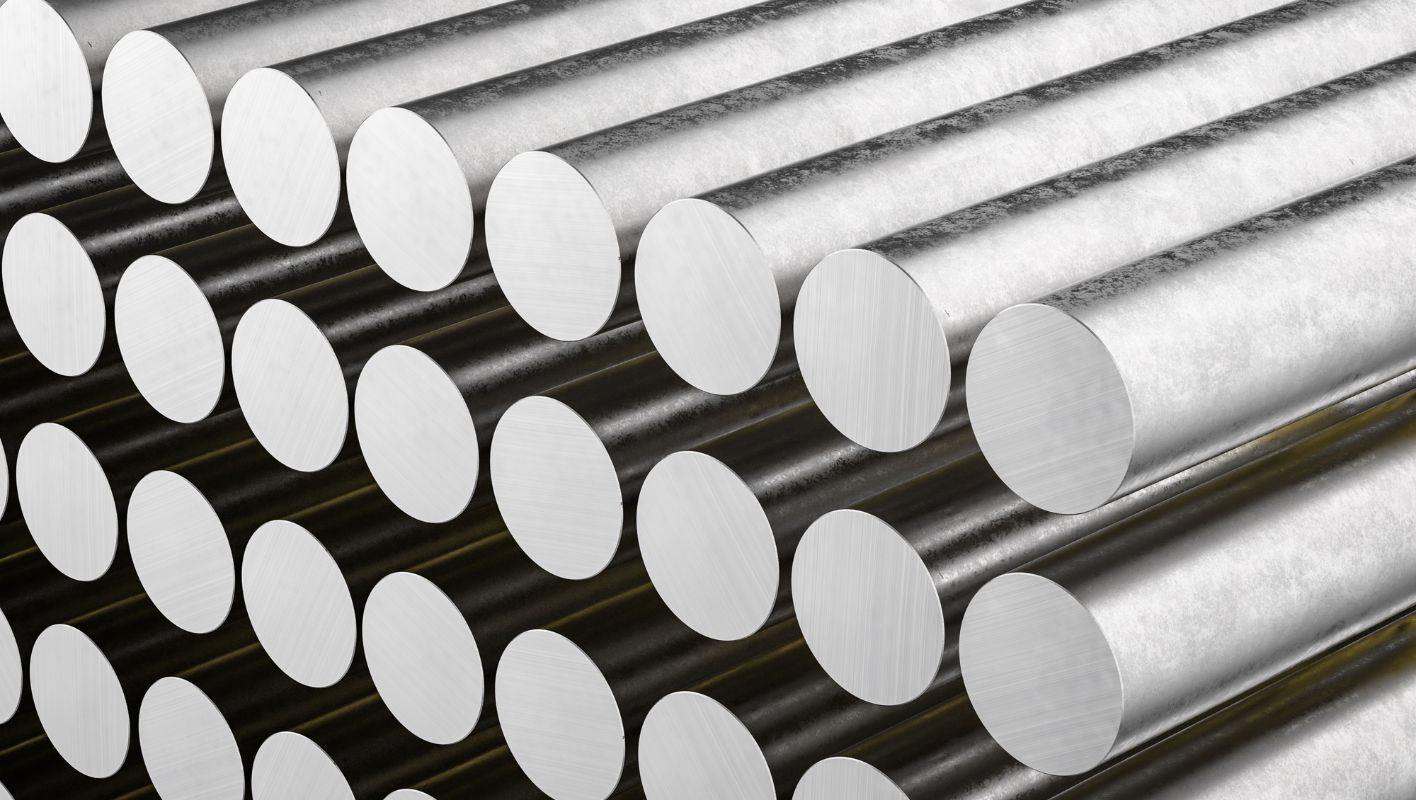
When I first stepped into the world of metal processing, choosing the right material felt like navigating a maze. Yet, 6061 aluminium quickly became a standout choice for its impressive qualities.
6061 aluminium is an alloy primarily made of aluminium, magnesium, and silicon, known for its superb mechanical properties and resistance to corrosion. Its strength, versatility, and workability make it a favorite in aerospace, automotive, and construction industries.
I remember my first major project where 6061 aluminium saved the day. We were in a crunch, needing something strong yet easy to work with. The alloy’s balance of toughness and flexibility meant fewer headaches during manufacturing. Plus, its corrosion resistance meant our products would stand the test of time in any weather conditions. Let’s delve into why this grade is a go-to for so many industries, offering a blend of reliability and adaptability that is hard to match.
6061 aluminium is widely used in the aerospace industry.True
Its strength, workability, and corrosion resistance make it ideal for aerospace.
6061 aluminium is primarily composed of aluminium and copper.False
6061 aluminium is mainly composed of aluminium, magnesium, and silicon.
What makes 6061 Aluminium so special?
Ever wondered why 6061 aluminium is such a hit in industries? Let me take you on a journey through its remarkable properties that make it a favorite among engineers and manufacturers alike.
6061 aluminium stands out due to its impressive strength-to-weight ratio, excellent corrosion resistance, and superb machinability. These attributes make it a go-to choice for industries like construction, automotive, and aerospace, offering durability and ease of fabrication.
Mechanical Properties of 6061 Aluminium
I still remember the first time I encountered 6061 aluminium during one of my early projects. It was the perfect blend of strength and flexibility, thanks to its composition mainly of magnesium and silicon. With a tensile strength of 290 MPa and a yield strength of 240 MPa, it was ideal for handling high-stress applications without buckling under pressure.
In terms of hardness, rated at 95 Brinell, it could withstand quite a bit of rough handling—a quality we needed for the components we were building. The elongation at break being about 12% was like the cherry on top; it gave us the confidence that it wouldn’t just snap under stress. For any aerospace component1 project, this balance of toughness and pliability was crucial.
| Property | Value |
|---|---|
| Tensile Strength | 290 MPa |
| Yield Strength | 240 MPa |
| Hardness | 95 Brinell |
| Elongation at Break | 12% |
Corrosion Resistance
I once worked on a project where corrosion resistance was non-negotiable. That’s when 6061 aluminium truly shined. Its ability to form a protective oxide layer in the air made it unbeatable for outdoor applications. It became our top pick for projects in marine environments2, where the salty air could wreak havoc on lesser materials.
The added bonus? We could enhance this protection with anodizing processes, which was a game-changer for ensuring longevity against environmental wear.
Thermal and Electrical Conductivity
I have to admit, the thermal conductivity of 6061 aluminium—around 167 W/m-K—was a lifesaver in a project involving heat exchangers. It efficiently dissipated heat, ensuring everything ran smoothly without overheating. And with electrical conductivity at about 40% IACS, it was versatile enough for use in electrical connectors and bus bars.
| Property | Value |
|---|---|
| Thermal Conductivity | 167 W/m-K |
| Electrical Conductivity | ~40% IACS |
Applications in Various Industries
In my career, I’ve seen 6061 aluminium being used in countless ways. Whether it’s making lightweight yet strong chassis in the automotive industry3 or forming durable frameworks in construction, its versatility is unmatched. It allows us to innovate without compromising on safety or reliability.
Machinability and Fabrication
One of my favorite aspects of working with 6061 aluminium is its machinability. Whether I’m drilling, milling, or welding, this alloy handles it all with grace. It gives me the freedom to create custom designs that meet stringent quality standards—something that’s crucial for any project aiming for perfection.
In essence, knowing the ins and outs of 6061 aluminium empowers me to harness its potential across various sectors. By understanding its mechanical strengths, corrosion resistance, and ease of fabrication, I can make informed decisions that align with the project’s unique requirements.
6061 aluminium has a tensile strength of 290 MPa.True
6061 aluminium is known for its tensile strength of 290 MPa.
6061 aluminium is unsuitable for marine environments.False
It has excellent corrosion resistance, ideal for marine use.
How does 6061 aluminum compare to other grades?
I remember my first encounter with 6061 aluminum and the many questions it sparked about its versatility and performance. Let’s dive into how it truly measures up against other aluminum grades.
6061 aluminum stands out for its fantastic machinability, weldability, and corrosion resistance, making it an all-around performer. When stacked against other grades like 5052 and 7075, 6061 strikes a perfect balance of mechanical strength and cost-efficiency, making it a go-to for many applications.
Mechanical Properties of 6061 Aluminum
From my experience working on various projects, 6061 aluminum has always been a reliable choice. Its moderate strength combined with excellent corrosion resistance4 sets it apart. With a tensile strength of about 290 MPa and yield strength of 240 MPa, it’s no wonder this alloy is favored in structural applications, particularly in the automotive and aerospace sectors.
Comparison with 5052 Aluminum
I once had a project where I had to choose between 6061 and 5052 aluminum for a marine application. Here’s what I found:
| Property | 6061 Aluminum | 5052 Aluminum |
|---|---|---|
| Tensile Strength | 290 MPa | 228 MPa |
| Yield Strength | 240 MPa | 193 MPa |
| Corrosion Resistance | Excellent | Superior |
5052 is noticeably softer and offers superior corrosion resistance, especially in salty environments, making it ideal for applications like fuel tanks and marine hardware5. It’s like the quiet achiever of the aluminum family.
Comparison with 7075 Aluminum
Then there’s the powerhouse: 7075 aluminum. I remember being impressed by its strength during a high-stress aerospace project. However, its cost always made me pause:
| Property | 6061 Aluminum | 7075 Aluminum |
|---|---|---|
| Tensile Strength | 290 MPa | 572 MPa |
| Yield Strength | 240 MPa | 503 MPa |
| Workability | Good | Fair |
While 7075 is incredibly strong, it doesn’t quite match up to 6061 when it comes to workability6 and weldability—key factors in some manufacturing processes.
Application Scenarios
Thanks to its well-rounded nature, I’ve seen 6061 used in so many scenarios—from bicycle frames to aerospace components. Its mix of strength, cost7, and workability often make it the preferred choice in:
- Bicycle frames
- Automotive parts
- Aerospace components
- Construction materials
Ultimately, choosing the right aluminum grade is like picking the right tool for the job. It all comes down to balancing strength needs, environmental factors, and budget considerations.
6061 aluminum has higher tensile strength than 5052.True
6061 aluminum's tensile strength is 290 MPa, while 5052's is 228 MPa.
7075 aluminum is more workable than 6061.False
7075 aluminum has fair workability compared to the good workability of 6061.
Where is 6061 Aluminium Commonly Used?
Ever wondered why 6061 aluminum seems to pop up in every industry you can think of? Let me take you on a journey through its many uses and why it’s such a favorite among manufacturers.
6061 aluminum finds its home in the aerospace, automotive, marine, and construction industries due to its impressive strength-to-weight ratio, easy machinability, and superb corrosion resistance. Its adaptability makes it a go-to choice for many applications.
Aerospace Applications
I remember the first time I saw a plane being assembled; it was both awe-inspiring and humbling. Seeing 6061 aluminum being used in aircraft fittings8 and structural components made me appreciate its lightweight yet robust nature. This alloy meets the stringent safety and performance standards demanded by the aerospace sector, making it a critical player in keeping those giant metal birds in the sky.
Automotive Industry
Cars have always been a passion of mine. I still recall restoring an old classic with my dad, where every part had its story. In today’s automotive world, 6061 aluminum is indispensable for manufacturing automobile frames9, wheels, and engine components. Its ability to handle high-stress conditions while remaining lightweight significantly boosts vehicle efficiency and performance. Plus, its corrosion resistance means car parts last longer, which is music to any car lover’s ears.
Marine Uses
Growing up near the coast, boats were a part of life. Watching them glide smoothly over saltwater is mesmerizing, and it’s all thanks to materials like 6061 aluminum. In the marine industry, this alloy is extensively used in boat hulls, masts, and marine hardware10. Its properties ensure durability and reliability even in the harshest marine environments.
Structural Applications
As someone who loves innovative architecture, I often find myself marveling at how structures stand tall against nature’s wrath. 6061 aluminum contributes significantly to construction, especially in load-bearing structures like bridges11 and towers. Its strength combined with ease of fabrication allows for creative architectural designs without compromising safety.
Tables of Common Uses
| Industry | Application |
|---|---|
| Aerospace | Aircraft fittings |
| Automotive | Vehicle frames |
| Marine | Boat hulls |
| Structural | Building frameworks |
These sectors highlight the versatility of 6061 aluminum, showcasing its widespread adoption due to its exceptional properties and adaptability across various challenging environments.
6061 aluminum is primarily used in the food industry.False
6061 aluminum is mainly used in aerospace, automotive, marine, and structural applications.
6061 aluminum is used in aircraft fittings.True
6061 aluminum's lightweight and durable nature makes it suitable for aircraft fittings.
What are the Cost Considerations for 6061 Aluminum?
Ever found yourself puzzled by the costs of 6061 aluminum? Let’s unravel the mystery together.
6061 aluminum’s cost hinges on factors like raw material prices, processing methods, and order size. Market demand and alloy composition also play vital roles in shaping its price tag.
Raw Material and Alloy Composition
You know how the price of a cup of coffee changes based on the quality of beans? It’s the same with 6061 aluminum. The alloy’s composition, primarily magnesium and silicon, can fluctuate like crazy with market changes. I once spent weeks trying to lock in a good rate for a batch, only to watch prices soar overnight because of a sudden spike in magnesium costs. Plus, if you’re aiming for high purity, be ready to see a corresponding hike in price due to higher purity aluminum12.
Processing Techniques
Remember assembling model airplanes as a kid and how each tool made a difference? That’s how processing works with aluminum. Different methods like extrusion, rolling, and forging all bring their unique cost implications. When I first dabbled in aluminum processing, I thought extrusion was the way to go for everything—until I learned rolling is king for sheets and plates. Each technique has its price, based on complexity and equipment used. Check out these cost implications13.
Volume and Scale
Ah, the joy of buying in bulk! It’s like snagging a family-sized cereal box at a discount. Larger orders can really slash per-unit costs, thanks to economies of scale. Back when I was sourcing for a big project, we managed to save a bundle just by scaling up our order size.
| Order Size | Discount |
|---|---|
| Small Batch | 0-5% |
| Medium Batch | 5-10% |
| Large Batch | 10-15% |
Here’s a quick peek at typical discounts that lead to substantial savings14.
Market Demand and Supply Chain
One time, when demand for aluminum spiked in the aerospace sector, I saw prices jump almost overnight. Keeping an eye on market trends is crucial—just like checking the weather before a road trip. Disruptions can send costs soaring, so staying informed can help you dodge those surprises by monitoring market trends15.
Environmental and Sustainability Factors
I once collaborated with a supplier who was passionate about sustainability—recycling scrap material and using energy-efficient tech. Sure, the upfront costs were steeper, but over time, those eco-friendly practices paid off in savings. Plus, it just feels good knowing you’re helping out Mother Earth.
Comparing Alternatives
Choosing between 6061 and other alloys is like deciding between an off-road SUV and a sleek sports car. For example, 7075 aluminum16 might boast greater strength but comes at a higher price. It’s all about finding the right balance for your project’s needs.
Conclusion
6061 aluminium is a versatile alloy known for its strength, corrosion resistance, and machinability, making it ideal for aerospace, automotive, marine, and construction applications.
-
Explore how 6061 aluminium’s balance of strength and flexibility benefits aerospace applications. ↩
-
Learn why 6061 aluminium is favored for environments prone to corrosion. ↩
-
Discover how this alloy contributes to lightweight yet robust automotive designs. ↩
-
This link provides insights into why 6061 aluminum’s corrosion resistance makes it ideal for structural applications. ↩
-
Explore why 5052 aluminum is preferred for marine hardware due to its superior corrosion resistance. ↩
-
Learn about the workability challenges associated with 7075 aluminum compared to other grades. ↩
-
Understand how cost influences the choice between different aluminum grades like 6061, 5052, and 7075. ↩
-
Explore how 6061 aluminum is used in aircraft fittings for optimal performance and safety standards. ↩
-
Learn about the benefits of using 6061 aluminum in automotive frames for enhanced efficiency. ↩
-
Discover why 6061 aluminum is preferred for marine hardware due to its corrosion resistance. ↩
-
Understand the role of 6061 aluminum in modern bridge construction for strength and durability. ↩
-
Stay updated on the latest trends in aluminum prices to make informed purchasing decisions. ↩
-
Understand how various processing techniques affect the overall cost of aluminum products. ↩
-
Learn how buying in bulk can lead to significant cost reductions for large projects. ↩
-
Gain insights into current market dynamics affecting aluminum prices globally. ↩
-
Compare the costs and benefits of different aluminum alloys to find the best fit for your needs. ↩






